In the manufacturing industry, sheet metal parts play a crucial role in a wide range of applications, from automotive components to aerospace structures, and from consumer electronics to industrial machinery. As a dedicated sheet metal parts supplier, I’ve witnessed firsthand the transformative power of various manufacturing processes, especially cold working. Cold working is a set of mechanical processes performed on metal at room temperature, including rolling, drawing, bending, and shearing. These processes not only shape the metal into the desired forms but also impart a variety of effects on the sheet metal parts. Understanding these effects is essential for both manufacturers like us and our customers who rely on high – quality sheet metal components. Sheet Metal Parts

1. Improved Mechanical Properties
One of the most significant effects of cold working on sheet metal parts is the improvement in mechanical properties, primarily strength and hardness. When sheet metal is cold – worked, its crystal structure is deformed. The atoms in the metal lattice are displaced, creating dislocations. These dislocations interact with each other and with other lattice defects, making it more difficult for the atoms to move past one another. As a result, the metal becomes stronger and harder.
For example, in the automotive industry, cold – worked sheet metal parts such as door panels and chassis components need to withstand significant mechanical stress. The increased strength and hardness achieved through cold working ensure that these parts can resist deformation during normal use and the occasional impacts on the road. This not only enhances the safety of the vehicle but also extends the service life of the parts.
In our experience as a supplier, customers often demand high – strength sheet metal parts for applications where the components will be under heavy loads. Cold working allows us to meet these requirements without the need for additional alloying elements, which can be costly. By carefully controlling the cold – working process, we can customize the strength and hardness of the sheet metal parts according to the specific needs of our customers.
2. Alteration of Grain Structure
Cold working also has a profound impact on the grain structure of the sheet metal. The grains in the original metal structure are elongated and deformed during cold working. This process breaks up the large, equiaxed grains into smaller, more elongated grains. The smaller grain size leads to an increase in the grain boundary area. Grain boundaries act as barriers to dislocation movement, further contributing to the increase in strength and hardness of the metal as mentioned earlier.
Moreover, the altered grain structure can affect the ductility of the sheet metal. As the metal is cold – worked, its ductility generally decreases. Ductility is the ability of a material to deform plastically before fracturing. In some applications, such as those requiring deep drawing or severe bending, a certain level of ductility is necessary. Therefore, as a supplier, we need to find a balance between the strength gained from cold working and the required ductility of the final part.
We often use techniques like annealing, which is a heat – treatment process, after cold working to restore some of the ductility of the sheet metal. Annealing involves heating the metal to a specific temperature and then slowly cooling it. This process allows the deformed grains to recrystallize into a more equiaxed and ductile structure while still retaining some of the strength benefits from cold working.
3. Introduction of Residual Stresses
Another important effect of cold working on sheet metal parts is the introduction of residual stresses. Residual stresses are stresses that remain in the material after the original cause of the stress (in this case, the cold – working process) has been removed. These stresses can be either tensile or compressive.
Tensile residual stresses can be problematic as they can reduce the fatigue life of the sheet metal parts. In cyclic loading applications, such as in rotating machinery or vibrating components, tensile residual stresses can act as crack initiators. Once a crack starts, it can propagate under the cyclic loading, leading to premature failure of the part.
On the other hand, compressive residual stresses can be beneficial. Compressive stresses on the surface of the sheet metal parts can help to resist crack initiation and propagation. For example, in some sheet metal parts used in the aerospace industry, where components are subjected to high – cycle fatigue loading, techniques such as shot peening (a form of cold working) are used to introduce compressive residual stresses on the surface of the parts.
As a sheet metal parts supplier, we are well – aware of the impact of residual stresses on the performance of our products. We use various methods to measure and control residual stresses. Non – destructive testing techniques, such as X – ray diffraction and ultrasonic testing, can be used to measure the magnitude and distribution of residual stresses. And then, appropriate heat – treatment or stress – relieving processes can be applied to minimize the harmful effects of tensile residual stresses and maximize the benefits of compressive residual stresses.
4. Surface Finish and Dimensional Accuracy
Cold working processes can also have a significant impact on the surface finish and dimensional accuracy of sheet metal parts. Precision cold – working operations, such as rolling and drawing, can produce sheet metal parts with smooth surfaces. A good surface finish is not only aesthetically pleasing but also has practical advantages. For example, in applications where the sheet metal parts come into contact with other materials, a smooth surface can reduce friction and wear.
In terms of dimensional accuracy, cold – working processes can ensure tight tolerances. For instance, in the electronics industry, sheet metal enclosures for smartphones or laptops need to have precise dimensions to fit all the internal components properly. Cold – working techniques, such as stamping, can be used to produce parts with high dimensional accuracy, often within a few hundredths of a millimeter.
At our company, we have invested in state – of – the – art cold – working equipment and quality control systems. Our advanced machinery allows us to perform cold – working operations with high precision, and our quality control team uses a variety of measurement tools, such as coordinate measuring machines (CMMs), to ensure that the sheet metal parts meet the required dimensional tolerances and surface quality standards.
5. Impact on Material Anisotropy
Cold working can also lead to material anisotropy in sheet metal parts. Anisotropy refers to the variation in material properties in different directions. During cold working, the deformation of the metal tends to align the grains and other microstructural features in a preferred direction. As a result, the mechanical properties of the sheet metal, such as strength, ductility, and elastic modulus, can be different in the direction parallel to the cold – working direction compared to the perpendicular direction.
This anisotropy can have both positive and negative implications. In some cases, the directional properties of the cold – worked sheet metal can be used to advantage. For example, in the design of automotive body panels, the anisotropic properties can be exploited to optimize the strength and stiffness of the panel in different directions according to the expected loading conditions.
However, in other applications, material anisotropy can cause problems. For example, if a sheet metal part needs to be formed into a complex shape, the anisotropy can lead to uneven deformation and cracking. As a sheet metal parts supplier, we need to carefully consider the anisotropy when processing the parts and communicating with our customers about the potential effects on the final product.
Conclusion and Call to Action
In conclusion, cold working has a multitude of effects on sheet metal parts, including improvements in mechanical properties, alterations in grain structure, introduction of residual stresses, changes in surface finish and dimensional accuracy, and the development of material anisotropy. As a sheet metal parts supplier, we have the expertise and capabilities to harness the benefits of cold working while minimizing its potential drawbacks.
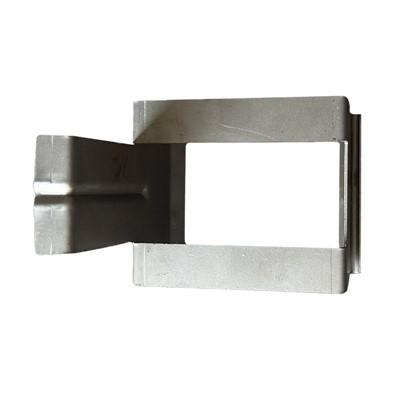
Whether you are in the automotive, aerospace, electronics, or any other industry that requires high – quality sheet metal parts, we are here to meet your needs. Our team of experienced engineers and technicians can work closely with you to design and manufacture sheet metal components that are tailored to your specific requirements. We pride ourselves on our commitment to quality, precision, and customer satisfaction.
Sheet Metal Parts If you are interested in sourcing sheet metal parts, we invite you to contact us to discuss your procurement needs. Our dedicated sales team will be more than happy to provide you with a detailed quotation, technical support, and any other information you may need. Let’s work together to bring your product ideas to life with our top – notch sheet metal parts.
References
- "Metallurgy: Principles and Applications" by George E. Dieter.
- "Manufacturing Engineering and Technology" by Serope Kalpakjian and Steven R. Schmid.
- Various industry – specific research papers on cold working of sheet metal published in journals such as the "Journal of Materials Processing Technology" and the "International Journal of Machine Tools and Manufacture".
Hebei Kailu Hardware Manufacturing Co., Ltd.
We’re well-known as one of the leading sheet metal parts manufacturers and suppliers in China, also support customized service. Welcome to buy high quality sheet metal parts made in China here and get free sample from our factory. For price consultation, contact us.
Address: Yaojiubo Village, Nanpi Town, Nanpi County, Cangzhou City, Hebei Province
E-mail: 714184486@qq.com
WebSite: https://www.weldedpart.com/
