Induction quenching is a heat treatment process that uses electromagnetic induction to heat the surface of a metal workpiece rapidly and then quenches it to improve its hardness, wear resistance, and fatigue strength. As a quenching furnace supplier, I am often asked about how an induction quenching furnace works. In this blog post, I will explain the basic principles of induction heating, the components of an induction quenching furnace, and the process of induction quenching. Quenching Furnace
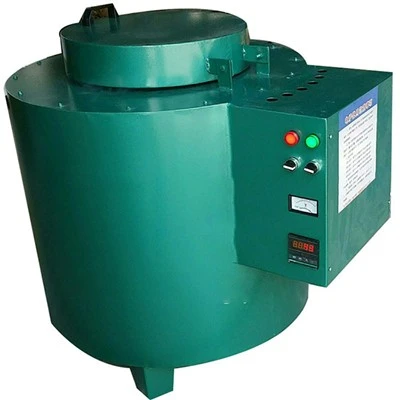
Basic Principles of Induction Heating
Induction heating is based on the principle of electromagnetic induction, which was discovered by Michael Faraday in 1831. When an alternating current (AC) flows through a coil, it creates an alternating magnetic field around the coil. If a conductive material, such as a metal workpiece, is placed within this magnetic field, eddy currents are induced in the material. These eddy currents flow through the resistance of the metal, generating heat according to Joule’s law (Q = I²Rt, where Q is the heat generated, I is the current, R is the resistance, and t is the time).
The amount of heat generated in the workpiece depends on several factors, including the frequency of the alternating current, the magnetic field strength, the electrical conductivity of the workpiece material, and the geometry of the workpiece and the induction coil. Higher frequencies are typically used for surface heating of thin workpieces, while lower frequencies are more suitable for heating thicker workpieces or for through-heating applications.
Components of an Induction Quenching Furnace
An induction quenching furnace consists of several key components, each of which plays a crucial role in the induction heating and quenching process.
Power Supply
The power supply is the heart of the induction quenching furnace. It converts the incoming electrical power (usually from the mains) into a high-frequency alternating current. The frequency of the output current can range from a few kilohertz (kHz) to several megahertz (MHz), depending on the application. Modern power supplies use solid-state technology, such as insulated gate bipolar transistors (IGBTs) or silicon-controlled rectifiers (SCRs), to achieve high efficiency and precise control of the output power.
Induction Coil
The induction coil is a specially designed conductor that is connected to the power supply. It is typically made of copper tubing, which is cooled by water to prevent overheating. The shape and size of the induction coil are carefully designed to match the geometry of the workpiece and to create a uniform magnetic field around it. When the high-frequency alternating current flows through the coil, it generates a magnetic field that induces eddy currents in the workpiece, causing it to heat up.
Workpiece Handling System
The workpiece handling system is responsible for positioning the workpiece within the induction coil and moving it through the heating and quenching processes. It can be a simple manual system for small-scale applications or a complex automated system for high-volume production. The handling system ensures that the workpiece is heated and quenched in a consistent and repeatable manner, which is essential for achieving the desired heat treatment results.
Quenching System
The quenching system is used to rapidly cool the heated workpiece after it has reached the desired temperature. The quenching process involves immersing the workpiece in a quenching medium, such as water, oil, or a polymer solution. The choice of quenching medium depends on the material of the workpiece, the desired hardness and microstructure, and the specific requirements of the application. The quenching system also includes components such as pumps, nozzles, and tanks to ensure a uniform and controlled quenching process.
Control System
The control system is responsible for monitoring and controlling all aspects of the induction quenching process, including the power output of the power supply, the temperature of the workpiece, the speed of the workpiece handling system, and the flow rate and temperature of the quenching medium. It uses sensors, such as thermocouples and pyrometers, to measure the temperature of the workpiece and adjusts the power output of the power supply accordingly to maintain a precise and consistent heating process. The control system also allows operators to set and adjust various process parameters, such as the heating time, quenching time, and cooling rate, to optimize the heat treatment results.
Process of Induction Quenching
The process of induction quenching typically involves the following steps:
Loading the Workpiece
The workpiece is first loaded onto the workpiece handling system and positioned within the induction coil. The handling system ensures that the workpiece is properly aligned and centered within the coil to ensure a uniform heating process.
Heating the Workpiece
Once the workpiece is in position, the power supply is turned on, and a high-frequency alternating current is sent through the induction coil. The magnetic field generated by the coil induces eddy currents in the workpiece, causing it to heat up rapidly. The heating time and power output are carefully controlled by the control system to ensure that the workpiece reaches the desired temperature.
Quenching the Workpiece
When the workpiece reaches the desired temperature, the power supply is turned off, and the workpiece is immediately transferred to the quenching system. The quenching medium rapidly cools the workpiece, causing a phase transformation in the material’s microstructure. This phase transformation results in an increase in the hardness and strength of the workpiece.
Post-Quenching Treatment
After quenching, the workpiece may undergo additional heat treatment processes, such as tempering, to relieve internal stresses and improve its toughness and ductility. Tempering involves heating the quenched workpiece to a temperature below its critical point and holding it at that temperature for a specified period of time before cooling it slowly.
Advantages of Induction Quenching
Induction quenching offers several advantages over traditional heat treatment methods, such as flame quenching and furnace heating.
High Efficiency
Induction heating is a very efficient process because it directly heats the workpiece without the need for a heating medium, such as a furnace atmosphere. This results in less energy consumption and faster heating times compared to traditional methods.
Precise Control
The induction quenching process can be precisely controlled using a modern control system. This allows for accurate control of the heating time, temperature, and quenching rate, which is essential for achieving consistent and repeatable heat treatment results.
Selective Heating
Induction heating can be used to selectively heat specific areas of a workpiece, which is useful for applications where only certain parts of the workpiece need to be hardened. This results in less distortion and improved dimensional accuracy compared to traditional heat treatment methods.
Environmentally Friendly
Induction heating is a clean and environmentally friendly process because it does not produce harmful emissions or waste products. It also reduces the need for large-scale furnaces and other heating equipment, which can help to conserve energy and reduce the carbon footprint of the manufacturing process.
Applications of Induction Quenching
Induction quenching is widely used in a variety of industries, including automotive, aerospace, manufacturing, and tooling. Some common applications of induction quenching include:
Automotive Components
Induction quenching is used to harden various automotive components, such as gears, shafts, axles, and steering components. This improves their wear resistance and fatigue strength, which helps to extend the service life of the components.
Aerospace Components
In the aerospace industry, induction quenching is used to harden critical components, such as turbine blades, landing gear parts, and structural components. This helps to ensure the reliability and safety of the aircraft.
Manufacturing Tools
Induction quenching is used to harden manufacturing tools, such as cutting tools, forming tools, and dies. This improves their cutting performance and durability, which helps to increase productivity and reduce tooling costs.
Medical Devices
In the medical industry, induction quenching is used to harden medical devices, such as surgical instruments and implants. This improves their corrosion resistance and biocompatibility, which helps to ensure the safety and effectiveness of the devices.
Conclusion
As a quenching furnace supplier, I understand the importance of providing high-quality induction quenching furnaces that are reliable, efficient, and easy to operate. By understanding the basic principles of induction heating, the components of an induction quenching furnace, and the process of induction quenching, you can make an informed decision when choosing a quenching furnace for your application.
If you are interested in learning more about our induction quenching furnaces or have any questions about the induction quenching process, please do not hesitate to contact us. Our experienced team of engineers and technicians is always available to provide you with expert advice and support. We look forward to working with you to meet your heat treatment needs.
References
Car-Bottom Forging Furnace -ASM Handbook, Volume 4: Heat Treating, ASM International.
-Black, J. T., & Kohser, R. A. (2012). Design of Mechanical Elements. John Wiley & Sons.
-Kubota, K. (2009). Induction Heat Treatment Handbook. Industrial Heating Equipment Association.
Danyang Dingfeng Industrial Furnace Co., Ltd.
Danyang Dingfeng Industrial Furnace Co., Ltd. is one of the most experienced quenching furnace manufacturers and suppliers in China, also supports customized service with low price. Please feel free to wholesale high quality quenching furnace made in China here from our factory. For pricelist, contact us now.
Address: Lizhuang Economic Development Zone, Danyang City
E-mail: saleszk@dffurnace.com
WebSite: https://www.dffurnace.com/
