If you’ve ever stood in a beauty supply aisle or browsed a lash tech forum, you’ve definitely seen the questions pop up: “Can I use professional eyelash glue on my natural lashes?” As someone who’s spent the last 8 years running a professional eyelash glue supply company, I hear this daily—from lash artists training new clients to regular folks who got ahold of a leftover bulk bottle from a tech friend and thought, “This should work for my at-home lash strips.” The short answer isn’t a flat yes or no, though. It’s nuanced, rooted in how professional glue is formulated, and tied to what your natural lashes can safely handle. Today, I want to break that down like I do for every client who calls our support line—no jargon, just real facts, and what this means for both you and your lash health. Professional Eyelash Glue
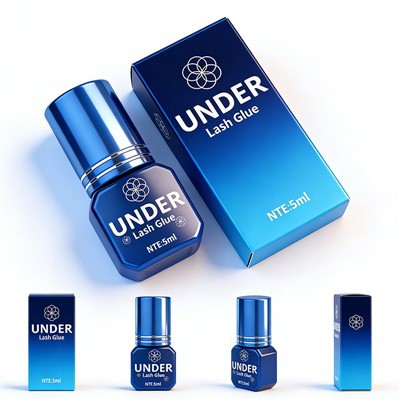
First, let’s talk about what makes “professional” eyelash glue different from the drugstore glue you grab for at-home lash extensions or strips. I’ve tested every formula we supply, and the core difference is in the ingredients and their concentration. Drugstore lash glues are designed for temporary use—think holding a strip lash on for 8 to 12 hours, max. Their main adhesive is often a mild cyanoacrylate formula, diluted with plasticizers to keep it flexible, and they’re formulated to be easy to remove with basic eye makeup remover, no professional assistance needed. That’s fine for a quick night out, but it’s not built to stay in place for the 6 to 8 weeks a proper lash extension set lasts.
Professional eyelash glue, on the other hand, is engineered to adhere semi-permanently to individual natural lashes, not a plastic strip. The cyanoacrylate concentration here is way higher—we’re talking 35% to 50% in the latex-free formulas we specialize in, vs. 15% to 20% in most retail glues. That strength is non-negotiable: professional lash extensions attach to the base of your natural lash, and they have to withstand daily moisture—sweat, shower steam, even rubbing your eyes when you’re half-asleep. If the glue wasn’t that strong, extensions would fall out within a day, which defeats the whole purpose.
But here’s where the risk comes in. That high concentration isn’t made for bare, sensitive natural skin around the eye, especially not when it’s applied incorrectly. I’ve seen customers say, “I put a dot of glue on my lash line, right by my inner corner, and my eye swelled up for 3 days.” That’s not a failure of the glue—that’s misuse. Professional glue is meant to be applied only to the tapered tip of an individual lash extension, 1mm away from the skin, not directly on your natural lash root or the skin on your eyelid. When people try to use it at home, they often skip that critical distance. The glue seeps onto the delicate mucous membranes of the eye, which are 10 to 20 times thinner than the skin on your arm. That can cause irritation, redness, or even chemical burns in severe cases—something I warn every new client about before they order from us.
Now, let’s get to the actual question: can it be used on natural lashes? If by “used” you mean adhering extensions to them, then technically yes—but only if you’re a licensed, trained lash artist. Professional training doesn’t just teach how to apply glue; it teaches lash mapping, proper isolation of each natural lash, and how to control the amount of glue applied so it never touches the skin. I’ve worked with lash techs who’ve been in the game for 10+ years, and even they will tell you that one tiny mistake—like applying too much glue or getting too close to the lash line—can cause issues for a client. That’s why our company only sells professional glue to verified lash artists, not to general consumers. We’ve built our reputation on safety, and we don’t want to be responsible for someone hurting themselves because they bought a product they aren’t qualified to use.
But what if you’re talking about using professional glue for something else on natural lashes—like fixing a lash that’s fallen out mid-day, or securing a loose strip lash that won’t stay? Even that’s a risk, and here’s why. Let’s say a natural lash is loose from the root. Trying to dab professional glue on it to reattach it isn’t a good idea. The glue is meant to bond synthetic lash fibers, which are designed to be durable and non-porous. Natural lashes are porous, made of keratin, like hair, and the high-strength professional glue can pull the entire natural lash out when it’s time to remove it—something you definitely don’t want. I’ve had clients come to us with “lash damage” from at-home use, and 9 times out of 10, it’s because they used professional glue to fix something on their natural lashes, not the extensions.
Wait, but what about people who swear they use professional glue at home and don’t have issues? I hear this all the time, and there are rare cases where it works. Maybe they have extra-tough natural lashes, or they apply it perfectly every time, never getting it near their skin. But even in those cases, there’s a hidden cost. Professional glue needs to be cured properly. Most at-home spaces don’t have the controlled humidity and temperature that professional salons use. If the glue doesn’t cure all the way, it can leave residue on your natural lashes that’s hard to remove, and over time, that residue can clog the lash follicles. Clogged follicles lead to weaker natural lashes, breakage, or even styes. It’s a slow, hidden damage—you won’t notice it after one use, but after a few months, you’ll start seeing your natural lash line thin out, and that’s not reversible without a lot of care.
Let’s also touch on ingredient safety, because this is something we test every batch for. Our professional eyelash glue is latex-free, formaldehyde-free, and has anti-fungal agents to prevent infection—all things we specify in our product details. But even with that, the high cyanoacrylate content means it’s a potent adhesive. For people with sensitive eyes, contact lens wearers, or anyone who gets seasonal allergies, this glue can trigger a reaction that over-the-counter glue wouldn’t. Drugstore glues are formulated to be more gentle for general use, so if you have a history of eye irritation, professional glue is probably not for you, no matter how careful you are.
I want to be clear here—this isn’t us trying to hold back product to make more money. We’ve had so many lash artists tell us that switching to our professional glue from a drugstore brand transformed their client retention, because our formula lasts longer and causes fewer reactions. We’ve also had former at-home users who ended up in the emergency room with eye irritation from misusing professional glue, and that’s the exact pain point we’re trying to prevent. Our business is built on long-term relationships with lash artists and their clients, not one-off sales to people who don’t understand what they’re handling.
So, to circle back to the original question: Can professional eyelash glue be used on natural lashes? The answer is, only if you are a trained, licensed lash artist following strict application protocols that prioritize your lash health. For anyone else, it’s best to stick to products designed for at-home use—they’re safer, gentler, and will give you the results you want without the risk of damage.

If you’re a lash artist looking to upgrade your supplies, or a salon owner wanting to restock with high-quality, reliable professional eyelash glue, we’d love to talk to you. We work with businesses of all sizes, from independent lash studios to large beauty chains, and can tailor our glue formulas to fit your specific needs, whether that’s for volume lash sets, classic lashes, or sensitive clientele. Reach out to our team for more details, samples, or to discuss how our products can support your business and keep your clients’ lash health a top priority.
Lash Bond References
- American Academy of Ophthalmology. (2021). Cosmetic Eye Procedures: Safety Guidelines for Lash Extensions and Adhesives.
- International Association of Estheticians. (2022). Professional Eyelash Adhesive Formulation and Safe Application Practices.
- Journal of Cosmetic Dermatology. (2020). Adverse Reactions to Eyelash Extensions: A Retrospective Analysis of 1,200 Patient Cases.
- World Health Organization. (2019). Safety of Adhesives Used in Cosmetic Procedures Involving the Ocular Region.
- Lash Industry Association. (2023). Best Practices for Lash Glue Distribution to Prevent Misuse by Untrained Individuals.
Guangzhou Xingrong Biotechnology Co., Ltd.
Guangzhou Xingrong Biotechnology Co., Ltd. is one of the most professional eyelash glue manufacturers and suppliers in China, also supports customized service with low price. Welcome to buy discount professional eyelash glue made in China here from our factory. Contact us for pricelist.
Address: No. 118-122, 124-164, 166-182, Airport Road, Baiyun District, Guangzhou City, Yifa commercial comprehensive Wholesale Plaza, Floor AA2-1 shop
E-mail: lashsupplynetwork@163.com
WebSite: https://www.lashsupplynetwork.com/
