If you’ve ever browsed geotech gear forums, hung out at construction job fairs, or shot the breeze with a civil engineer who’s spent half their career digging (or probing) into ground, you’ve probably heard the term “static cone penetrometer” — or SCPT for short. As someone who’s been on the supply side of these bad boys for over a decade, one question comes up more than any other: “What’s the actual penetration rate of a static cone penetrometer?” I get it — when you’re out on a job, pressed for time, and staring down a site with a tight schedule, knowing how fast you can push that cone through the dirt doesn’t just make your day easier, it keeps your project from bleeding money. Static Cone Penetrometer
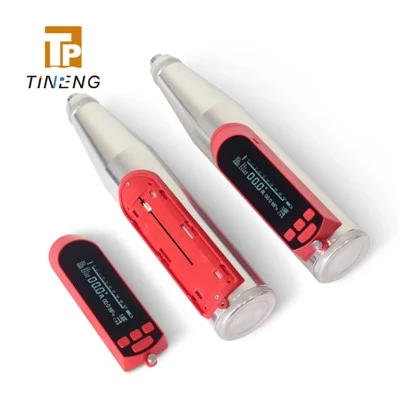
First, let’s cut through the jargon. A static cone penetrometer isn’t the same as a dynamic one (like a standard penetrometer you hammer into the ground). It’s all about slow, steady, consistent force — we’re talking pushing a 35.7mm diameter steel cone (that’s the standard size, by the way) into the ground with a continuous, measured load, no impact, no bouncing. The penetration rate is basically how far you can drive that cone in a set amount of time. But here’s the thing: it’s not a one-size-fits-all number. A lot of new guys (and gals) in the game think it’s just a rule like “20 mm per second, done” — nope, that’s about as useful as a shovel with a broken handle out here.
Let’s break down the main factors that actually shift that rate, because that’s where the real info is. First and foremost: the ground itself. Soft, squishy stuff like silt, loose sand, or that classic post-rain mud you find on a lot of suburban development sites? Those are easy. We’ve run tests where we pushed the cone at 50 mm per second, no issues, barely any strain on the rig. But toss in dense clay, compacted gravel, or a layer of that weird rocky fill contractors love to dump on construction sites? Suddenly that rate plummets. We had a job out west last year where we had to probe through glacial till — a mix of clay, gravel, and boulders no bigger than a washing machine — and we were lucky to hit 8 mm per second. The rig was working as hard as a barista during morning rush, and even then, we had to slow down to keep the data consistent. The cone’s tip resistance (that’s the force the ground pushes back, recorded every millimeter) doesn’t just depend on soil type — if there are organic layers or voids, that changes too. I once had a project near an old wetland where we hit a peat layer that felt like pushing Jell-O; we actually cranked the rate to 60 mm per second there because we weren’t getting any meaningful data below that slow, steady rate was messing with the readings.
Next up: the rig itself. Not all SCPTs are created equal, and that makes a huge difference in penetration speed. We supply two main lines of rigs: our compact, track-mounted ones for small urban sites (think residential developments, road widening projects) and our heavy-duty, truck-mounted ones for big civil jobs (bridges, dams, mine sites). The compact ones usually max out around 10 kN of push force, so their top rate is around 30 mm per second in ideal soil. The heavy-duty ones? They can throw 50 kN of force at that cone, so in soft to medium soil, they’ll hit 40 mm per second no sweat. But if you get a cheap, under-powered rig (we’ve seen guys rent these for a weekend job and regret it), you’re capped at like 15 mm per second even in soft dirt. The feed system matters too — hydraulic vs. mechanical. Hydraulic is the standard now, because it lets you adjust rate on the fly without stopping the probe. Mechanical is clunkier, so you’re stuck with a fixed rate, which is a pain when you hit a soil layer that needs a speed tweak. Also, the cone itself: a worn cone tip (even a little bit of rust or chipping) can add friction, slowing you down by 20-30% without you even realizing it. We always tell clients to inspect their cone before every job — it takes 5 minutes, saves hours of time.
Then there’s the standard guidelines, because this isn’t just guesswork. The main bodies that set SCPT rules (like ASTM International or the International Society for Soil Mechanics and Geotechnical Engineering, or ISSMGE) have laid out recommended ranges, and that’s a good baseline to start from, not a hard rule. ASTM D5778, which is the go-to standard for static cone penetration testing, says that the penetration rate should be between 10 and 50 mm per second, with a preference for 20 mm per second as the middle ground. Wait, but that’s a range — so why do so many people just stick to 20? Because it’s easy to remember, and it works for most average sites. But like I said earlier, if you’re in soft silt, 50 mm is fine, and if you’re in dense till, 10 mm might be all you can do. The key here is that the rate has to be consistent, and it has to be slow enough to let the pore water pressure (if you’re doing piezocone tests, that’s another thing) dissipate. If you push too fast, you get inaccurate readings that make your geotech engineer hate you, so it’s a balance between speed and data quality.
Wait, let’s talk about piezocones for a second, because that’s a big part of the game now. A piezocone (CPTU, for cone penetration test with pore pressure) has a pore pressure sensor built into the cone tip, so you’re measuring both tip resistance and water pressure as you probe. For those, the rate is even more critical — pore pressure takes time to equalize with the ground, so you can’t push too fast. ASTM says for CPTU, the rate has to be between 10 and 20 mm per second, no exceptions. Push at 30 mm, and your pore pressure readings are garbage, which makes all that extra sensor work pointless. We had a client last year who tried to cut corners on a CPTU job, pushed at 35 mm per second, and had to re-do 100 meters of probing because his pore pressure data was off. That cost him twice as much time and money, so trust me, the rate isn’t just about how fast you finish the job — it’s about not wasting work.
Now, let’s get real about what this means for you, if you’re on the procurement side. If you’re looking to buy or rent an SCPT, don’t just ask for “how fast it can go.” Ask about maximum push force, adjustable feed rate, and what soil types it’s rated for. If you’re working on small residential sites with mostly soft soil, a compact track rig with 10 kN of force, max rate 35 mm per second, will do the job. If you’re doing big highway projects with mixed soil layers, you’ll want that heavy-duty rig with 50 kN, max 50 mm per second, and hydraulic adjustment. And always, always, ask about training for your crew — we give a full day of on-site training with every rig we sell, because even a great rig is useless if your operator doesn’t know how to tweak the rate for different soils.
I’ve been in this game long enough to know that a lot of people gloss over penetration rate, like it’s a trivial detail. But when you’re out on a 12-hour shift, and your probe is moving at 8 mm per second instead of 20, that’s twice as long on site, which means overtime, delayed schedules, and frustrated clients. We’ve had clients come to us after renting a cheap rig, frustrated because they were only hitting 12 mm per second in soft soil, and after switching to our compact track rig, they’re at 30 mm per second, finished their job two days early. That’s the value of getting this part right.
Let’s bust a common myth, too: some guys think you can crank the rate all the way up to make up for slow soil. Nope. If you’re pushing too fast, you get “viscous effects” — the ground acts different than it would at a slower rate, so your tip resistance readings are higher than they should be. That’s a huge problem for geotechnical engineering, because they use those readings to calculate bearing capacity, settlement, and all that stuff that makes your structure safe. If your data is off, you could end up with a foundation that’s not strong enough, which is a disaster waiting to happen. So penetration rate isn’t just about speed — it’s about getting accurate, reliable data that makes your project work.
Another thing to consider: depth. The deeper you probe, the more force you need, and the slower your rate. At 10 meters deep, in soft soil, you might hit 40 mm per second, but at 30 meters, that same soil might only let you hit 25 mm per second, because the overlying weight of the ground is adding pressure. We did a test last year where we probed a sandy soil up to 50 meters deep, and the rate dropped from 45 mm per second at the surface to 18 mm per second at the bottom, just because of the depth. That’s normal, and it’s something you have to plan for when scheduling your job.
So putting it all together: the penetration rate of a static cone penetrometer isn’t a fixed number. It’s a range, usually between 8 and 50 mm per second, depending on three main things: the soil type (soft vs. dense), the rig’s power and capabilities, and whether you’re doing a standard cone test or a piezocone test, which adds pore pressure limits. The sweet spot for most average jobs is around 20 mm per second, but you have to be flexible — adjust up in soft, uniform soil, adjust down in dense, rocky or clay layers, and stick to 10-20 mm per second for CPTU work.
At the end of the day, if you’re investing in an SCPT, you want a rig that gives you the flexibility to adjust rate on the fly, enough power to handle whatever soil you run into, and support from a supplier who knows this stuff inside and out. We’ve been supplying SCPTs to geotech teams across North America for years, and we’ve seen first-hand how getting the penetration rate right makes all the difference between a job that runs smooth and one that’s a headache.
If you’re in the market for a static cone penetrometer, or you’ve got questions about which rig fits your site, what rate to use for your project, or anything else related to SCPTs, we’re here to help. Shoot us a message, and we can walk through your needs, talk through different rig options, and make sure you have everything you need to get the job done right — fast, accurately, and without the stress.
Sample Processing Apparatus References:
ASTM International. (2020). Standard Test Method for Penetration Test and Split-Barrel Sampling of Soils (ASTM D5778). West Conshohocken, PA.
International Society for Soil Mechanics and Geotechnical Engineering (ISSMGE). (2018). Practice Guidelines for Cone Penetration Testing. Rotterdam, Netherlands.
American Geotechnical Institute (AGI). (2021). Static Cone Penetrometry: Principles and Field Applications. New York, NY.
Zhuozhou Tianpeng Imp. and Exp. Trade Co., Ltd.
Zhuozhou Tianpeng Imp. and Exp. Trade Co., Ltd. is one of the most professional static cone penetrometer manufacturers and suppliers in China, featured by quality products and good price. Please rest assured to buy advanced static cone penetrometer made in China here from our factory. Customized orders are welcome.
Address: Building C28, Hegu Technology Industrial Park, Development Zone, Zhuozhou, Hebei, China
E-mail: zhangdajing@testmould.com
WebSite: https://www.testmould.net/
