If you’ve ever got a tiny, super-precise metal part for a watch, a medical implant, or even a custom tool, there’s a good chance Wire Cut EDM made it. I run a small Wire Cut EDM supply shop, and let me tell you—one of the most common questions I get from new customers is, “Wait, what even can this machine cut? I thought it only worked on steel?” Wire Cut EDM
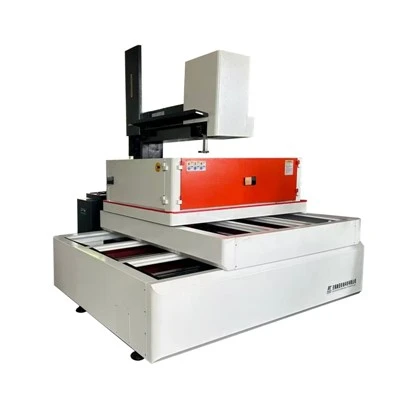
Nah, dude. Wire Cut EDM (full name Wire Electrical Discharge Machining, but we all just say WEDM) isn’t some one-trick pony for plain old carbon steel. Sure, it crushes steel like nobody’s business, but it handles so many other materials that most folks don’t even realize. Today I’m breaking down exactly what materials we work with, why WEDM works for each, and why that matters for your next project—whether you’re a machinist, a hobbyist, or running a big manufacturing floor.
First, let’s keep it real: WEDM’s whole vibe isn’t “cutting” like a saw or a mill. It uses a thin brass, copper, or even zinc-coated wire (usually 0.004” to 0.012” thick, super fine) and blasts tiny electrical sparks between the wire and the workpiece. Those sparks melt and vaporize micro-pieces of metal (or whatever conductive material you’re working with) without touching the part at all. No physical force means no distortion, no burrs, no rough edges—perfect for parts that need tight tolerances, like ±0.0001” or even tighter. That’s why it works on anything conductive, right? If a material can carry an electrical current, WEDM can process it. Let’s dive into the most common ones we run, with real examples from our shop so it’s not just textbook stuff.
Starting with the big one that everyone knows: tool steels. Think D2, A2, S7—those are the workhorse steels for making dies, molds, punch tools, even custom blades. D2 is a high-carbon, high-chromium tool steel, super tough, used for stamping parts or making mold inserts. We cut D2 all the time—last month we did a run of 20 tiny stamping dies for a car’s interior door latches. The alternative? Milling that would leave rough edges, or grinding that would take forever. With WEDM, we feed it at a steady pace, and because the sparks are so precise, we didn’t have to do any secondary finishing. The customer was stoked because they got parts that fit perfectly on the first try, no guesswork. And here’s a pro tip: if you’re cutting hardened tool steel (like heat-treated to 60 HRC or higher), WEDM doesn’t care about the hardness. Milling hardened steel is a nightmare for tooling, but WEDM just zips through it. No broken end mills, no extra steps—game changer.
Next up, stainless steel. 304, 316, 17-4 PH—all of these are chef’s kiss for WEDM. 316 is the marine-grade stainless, right? We recently cut a bunch of 316 brackets for a boat manufacturer. The brackets had to hold up to saltwater, so they couldn’t have any burrs or rough edges that would corrode. If we’d used a bandsaw, the burrs would be a corrosion hotspot, and milling would leave tool marks that the customer had to polish for hours. WEDM? No physical contact, so the cut surfaces are smooth enough that the brackets go straight to assembly. 17-4 PH is a precipitation-hardened stainless, super strong, used for aerospace parts. We cut some tiny 17-4 pins for a jet engine component last quarter—those pins had to be exactly the same length within a thousandth of an inch, and WEDM pulled that off easy.
Wait, what about aluminum? I know a lot of machinists who avoid cutting aluminum with WEDM because it conducts heat like crazy, and aluminum chips can be messy. But hear me out—aluminum works great if you dial in the right parameters. We cut custom aluminum heat sinks all the time for electronics companies. Heat sinks need super sharp, precise fins, and if you mill aluminum, you can get chatter marks or uneven fins. WEDM gives you dead-straight fins with no burrs, which is perfect for making sure the heat transfers evenly. The only thing to watch with aluminum is that it’s conductive (obviously) and you need to use enough deionized water—aluminum swarf melts faster, so the water flushes it away. As long as you tweak the settings, it’s no problem. We also did a run of aluminum casing parts for a portable speaker last year, and the customer said the WEDM cuts were so clean they skipped the polishing step.
Now, the stuff that surprises people: exotic alloys. Inconel, titanium, Hastelloy—these are the high-performance metals used in aerospace, medical devices, and oil and gas, right? Titanium is a big one. We cut custom titanium implants for dental surgeons a few months back. Titanium is light, strong, and biocompatible, but it’s also super gummy and tough to machine with traditional tools. WEDM cuts it like butter. We had to make tiny, precise notches on the implant for the surgeon to attach it to the jawbone, and the accuracy was spot on. No heat-affected zones (HAZ) either, which is huge for medical parts—HAZ can weaken the material or mess with its biocompatibility. Inconel is another fan favorite. It’s used in gas turbines and rocket parts because it can handle super high temperatures and corrosion. We cut turbine blade segments for a power plant last year—those blades have complex, curved internal passages, and WEDM can cut those shapes that milling machines can’t reach without special tooling. Hastelloy is similar, used for chemical processing equipment, and WEDM handles it even though it’s super tough. Exotic alloys might be expensive, but WEDM minimizes waste because the wire is so thin—saves customers money in the long run.
Wait, hold on—what about non-metals? Yeah, non-conductive materials don’t work with standard WEDM, but there’s a workaround called micro-WEDM or even EDM milling, but let’s stick to the standard wire we use. Some people ask about ceramic—like alumina or zirconia, which are used in medical implants and electronics. They’re non-conductive, so you can’t cut them with regular WEDM, but if you coat them with a thin conductive layer (like metalizing), you can process them. We’ve done a few custom ceramic parts for a company making sensors, and that trick works, but it’s a special case. And what about materials that are conductive but soft? Like copper or brass? We cut custom copper electrodes all the time for other EDM machines, actually. Copper is super conductive, and WEDM gives you perfect, smooth electrodes without any deformation. We also cut brass components for musical instruments—last year we did a run of tiny brass valve parts for trumpet makers. The precision was so good that the trumpets played in tune straight out of the box, no adjustments needed.
Now, let’s talk about what we usually don’t work with, just to be clear. If it’s not conductive, standard WEDM won’t touch it—so plastics, glass, wood, most ceramics unless they’re coated. And super fragile materials? Like thin foil metal (thinner than 0.001”) can be tricky because the wire tension might pull it, but we’ve worked with some hobbyists who make tiny custom jewelry parts using WEDM, so it’s not impossible—just needs extra care. Also, really large parts? We have a standard machine with a work envelope of 20” x 12” x 10”, so if you need something way bigger, we can work with third-party shops, but most of our customers are running parts that fit in that range.
Here’s the thing that a lot of new folks don’t get: WEDM isn’t just for cutting anything conductive—it’s for cutting things where precision and quality matter more than speed. If you need a single custom part for a prototype, that’s where WEDM shines. If you need 10,000 identical parts for mass production, we can handle that too, because we have consistent parameters set up for each material. Last month we did a 5,000-part run of 304 stainless steel washers for a food processing company, and every single one was within ±0.0005” of the specified size. No mistakes, no reworks.
I’ve been in this WEDM supply game for 8 years, and the biggest takeaway I have is that too many people sleep on what this machine can do. They go to a regular machinist and get told they can’t make that custom part because it’s a weird material, or it needs too much precision. But WEDM? It’s the workhorse that can handle almost any conductive material, with tolerances that are impossible with traditional methods.
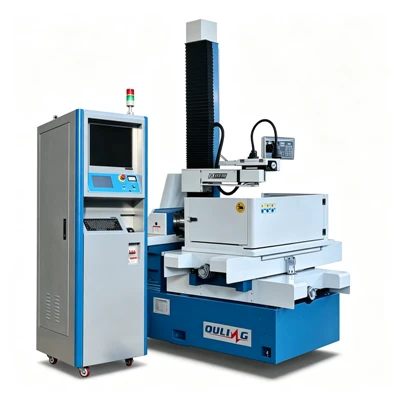
If you’re working on a project—whether it’s a prototype, a small run, or a big manufacturing order—and you’re wondering if WEDM can process your material, reach out to us. We’ll walk you through what works, tweak settings if needed, and make sure you get parts that fit exactly what you need. No jargon, no hidden fees, just solid advice from people who work with this stuff every single day. Don’t guess on your next part—let’s make it right with Wire Cut EDM.
Mirror Finish Die Sinker EDM References:
- “Wire Electrical Discharge Machining (WEDM) Process: A Review”, Journal of Manufacturing Processes, 2021
- Modern Wire EDM Technology, Society of Manufacturing Engineers, 2019
- “Non-Conventional Machining Processes for Advanced Materials”, International Journal of Machine Tools and Manufacture, 2020
- Practical Wire EDM Guide: Techniques and Applications, Hanser Publications, 2018
Taizhou Ouling CNC Equipment Co., Ltd.
As one of the most professional wire cut EDM manufacturers and suppliers in China, we’re featured by quality products and good price. Please rest assured to buy advanced wire cut EDM made in China here from our factory. Welcome to contact us for quotation.
Address: No. 9 jingang Road, Yangzhou City Jiangsu Province, China
E-mail: 574751243@qq.com
WebSite: https://www.oulingedm.com/
