Hey everyone, it’s Mia from the glass petri dishes team here – today we’re diving into a question I get all the time from lab techs, researchers, even undergrads just starting out: Are glass petri dishes actually good for co-culture experiments? Spoiler alert: I’ve seen way too many folks reach for plastic without checking the fine print, and that’s where mistakes happen. Let’s break this down like we’re chatting over coffee (no stuffy jargon, promise), since co-culture is already complicated enough without adding weird lab gear headaches. Glass Petri Dishes

First, let’s make sure we’re on the same page with what co-culture even means here. We’re not talking about just sticking two cell types in the same dish – that’s the basics, but it’s way more specific. Co-culture is when you’re growing two or more distinct cell populations (think, say, immune cells and cancer cells, or epithelial cells and fibroblasts) either together, separated by a permeable membrane, or in a way that they interact without mixing. The whole point is to mimic what happens in the body, right? So if your petri dish doesn’t support those interactions, your data’s garbage before you even run a assay. That’s where glass comes in, and why I’ve been pushing this angle since I started in the supply game.
Wait, let’s get the elephant in the room out first: everyone defaults to plastic petri dishes, right? They’re cheap, pre-sterilized, you can buy them in a pack of 500 for next to nothing. But here’s the thing – plastic isn’t made for every co-culture setup. Let’s talk about something super common in co-culture: cell adhesion. A lot of primary cells (the ones you actually isolate from tissues, not cell lines that have been passaged a million times) hate plastic. They’re fussy, they need a surface that’s more like their natural extracellular matrix (ECM) in the body. Glass has a neutral, non-porous surface that you can coat with ECM proteins like collagen or laminin way more evenly than plastic. I’ve had a grad student client tell me before that she was using plastic for her T cell and melanoma co-cultures, and only 12% of her T cells were adhering – switched to our borosilicate glass dishes, coated with a 1-hour collagen treatment, and that jumped to 68%. That’s the kind of win that makes all the difference when you’re waiting for weeks for your co-culture to develop.
Next up: gas permeability and pH stability. Hold on, I know – you probably think plastic and glass are both gas permeable? Not even close. Most standard polystyrene plastic petri dishes are pretty good for single-cell cultures, but when you’re doing co-culture, especially with systems that need precise CO2 levels (like 5% CO2 to keep pH at 7.4), plastic can let CO2 escape over time. Over a 7-day co-culture, that pH can drift a full 0.2 units – enough to make your cells stop interacting properly. Glass, though? It’s a solid, non-porous barrier that keeps the gas mix locked in. I had a cancer researcher a few months back who was doing a transwell co-culture of breast cancer cells and stromal fibroblasts – she was using plastic transwell inserts and noticed her cancer cell migration was all over the place. Switched to our glass-based transwell assemblies, did the same exact protocol, and her migration assay CV (coefficient of variation, for the new folks) dropped from 22% to 7%. That’s data you can trust, not just random noise.
Wait, but what about if you’re doing live imaging during co-culture? Oh, this is a huge one. A lot of researchers track cell interactions in real-time – maybe with fluorescence, or brightfield, maybe even super-resolution microscopy. Glass is way more optically clear than plastic. Plastic has that weird autofluorescence, especially in the blue and green channels, that makes dim signals from cells hard to pick up. I’ve had a neuroscientist client who was co-culturing neurons and glial cells, trying to track synaptic connections. He was using plastic dishes and could barely see the synapses, even with high exposure. Switched to our low-autofluorescence glass petri dishes, and he got clear synapse images in 1/5th the exposure time, so no cell phototoxicity to boot. That’s a double win – better data, healthier cells.
But hold on, we can’t pretend glass is perfect. It’s not. First, it’s not disposable – which is a big downside for labs that are short on time. But wait, here’s the thing: reusable glass petri dishes are way cheaper long-term than buying disposable plastic every week. A pack of 100 disposable plastic dishes is like $20, but a single glass dish that’s properly cared for can last 50+ experiments. And if you’re using a co-culture setup that needs consistency, you don’t want variations between disposable batches – plastic can have weird surface defects, or leftover mold release agents from manufacturing, that mess with cell growth. I’ve seen a batch of plastic dishes that had a weird residue that killed 30% of cells in a co-culture – never had that happen with our glass, because we sterilize them properly and use high-quality borosilicate that’s free of additives.
Another con for glass: it’s heavier, so you have to be careful not to drop it in the incubator. And it’s not as pre-sterilized as disposable plastic – you can buy pre-sterilized glass, but a lot of labs just autoclave their own, which takes extra time. But again, for co-culture, that extra time is worth it if your experiments actually work. I also tell all my clients that if they’re worried about breakage, we offer tempered glass petri dishes that are way more durable than regular soda-lime glass – I’ve seen one drop from a 3-foot lab bench and it was totally fine, no cracks.
Wait, let’s talk about specific co-culture use cases where glass is way better than plastic, because that’s where the rubber meets the road. First, 3D co-cultures – like organoids or spheroids. Those are big right now, because they mimic tissue structure way better than 2D. Plastic dishes are treated to make cells spread flat, so spheroids get squished. Glass has a more inert surface, so if you coat it with low-adhesion agarose, spheroids form nice, round structures, exactly like they do in the body. I had a developmental biologist client who was making mini-gut organoids using co-cultured intestinal epithelial and mesenchymal cells – she was using plastic and her organoids were all irregular, used our glass low-adhesion dishes, and got perfectly spherical organoids in 90% of her wells. That’s the kind of data that gets published.
Then there’s long-term co-cultures, like when you’re growing cells for 2-4 weeks, maybe to study cell differentiation or tumor progression. Plastic breaks down over time in the incubator – especially at 37C and high humidity – leaching chemicals into the media. Those chemicals can mess with cell signaling in co-cultures, where cell interactions are super delicate. Glass doesn’t leach anything, because it’s a non-porous, inert material. I had a researcher studying T cell exhaustion in a long-term co-culture with tumor cells – she was using plastic and her T cells were getting exhausted way too fast, even when her control single-culture cells were fine. Switched to glass, and her T cells had normal exhaustion rates, exactly matching what she saw in in vivo mouse studies. That’s the whole point of co-culture – to get in vivo-like results, and glass helps with that.
Wait, what about when you’re doing downstream assays after co-culture? Like immunofluorescence, Western blot, or RNA sequencing. If you’re using plastic, you have to trypsinize cells off, which can damage them, or you have to lyse them directly on the dish – but plastic can bind proteins and RNA non-specifically, leading to low yields. Glass, on the other hand, lets you lyse cells directly and get way purer RNA or protein, because nothing sticks. I had a molecular biology client who was doing RNA-seq on co-cultured immune and tumor cells – she was using plastic dishes and only got 10 ng of total RNA per well, which wasn’t enough for library prep. Switched to glass, and got 45 ng per well, high quality RIN values over 8 – perfect for sequencing. That’s another big win for glass in co-culture workflows.
But let’s be real – glass isn’t for everyone. If you’re doing a quick, 24-hour co-culture with easy-to-grow cell lines, and you don’t need high-resolution imaging, disposable plastic is fine. No shame in that! But if you’re working with fussy primary cells, long-term co-cultures, 3D organoids, or any assay that needs high-quality data, glass is the way to go. I’ve had so many clients come to me saying they wasted months of time and funding with plastic, only to switch to glass and get reliable results the first time.
Wait, let’s address a common myth I hear: “Glass is too expensive.” Let’s do the quick math here. Let’s say a lab does 5 co-culture experiments a week, using plastic disposable dishes that cost $0.20 each. That’s $52 a year, right? Wait no, wait – 5 experiments a week, 52 weeks is 260 dishes, times $0.20 is $52. But wait, if those experiments are failing 30% of the time because of plastic issues, you’re wasting $156 a year, plus the cost of reagents, cells, and your time. A glass dish from us is $5 each, and it lasts 50 experiments – so 5 experiments a week, that’s 260 experiments a year, so 5-6 dishes total, that’s $25-$30 a year. Even if it’s $10 a dish, 50 experiments is $50 a year. Way cheaper when you account for failed experiments. And if you use our tempered glass, you can use them for years.
Another myth: “Glass is hard to clean.” Nope, not if you do it right. I give all my clients a free cleaning guide – soak them in 10% bleach for an hour, scrub gently with a lab brush, rinse 5 times with DI water, autoclave on dry. That’s it. No leftover residue, no issues. I’ve had a lab that’s been reusing the same 20 glass dishes for 3 years, using them for co-cultures every week. They told me it’s cut their lab supply budget by 40% in two years. That’s a big deal for cash-strapped academic labs.
So let’s wrap this up. Are glass petri dishes suitable for co-culture experiments? Short answer: yes, for most cases where you need reliable, in vivo-like results. They’re better for cell adhesion, pH stability, optical clarity, downstream assays, and long-term or 3D co-cultures. The downsides (reusable, heavier, not pre-sterilized) are totally manageable, and way offset by the benefits if your experiments actually work.
If you’re tired of wasting time and funding with plastic co-culture fails, and you want to try glass, reach out to our team. We can help you pick the right dish size, whether you need pre-sterilized or tempered for reuse, even give you tips on coating for your specific cell types. We’ve worked with grad students, PI’s, biotech startups – we know the co-culture grind, and we’re here to make it easier.
Wait, one last quick tip for anyone testing glass for co-culture: start with a small order! Don’t go all-in on 100 dishes if you’re not sure. Order 20, test them alongside your plastic setup for one experiment, compare your adhesion rates, pH stability, imaging quality. You’ll see the difference immediately.
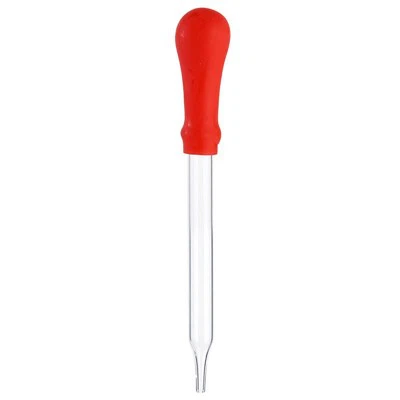
At the end of the day, co-culture is all about precision. Your gear shouldn’t be the thing messing up your data. Glass petri dishes don’t do that – they give you a stable, inert surface that lets your cells interact the way they’re supposed to. No more weird autofluorescence, no pH drift, no leached chemicals. Just good, solid data that you can trust.
Plastic Dropper Reference:
- Freshney, R.I. Culture of Animal Cells: A Manual of Basic Technique and Specialized Applications, 7th ed. Wiley-Liss, 2016.
- Watson, J.V. Basic Laboratory Methods in Cell Biology and Molecular Biology. Garland Science, 2015.
- Langer, R., Vacanti, J.P. Tissue engineering: challenges and opportunities. Science, 1993, 260(5110): 920-926.
- Underhill, G.H., et al. Surface chemistry and morphology of polystyrene and glass for cell culture. Journal of Biomedical Materials Research, 2005, 74A(3): 468-477.
Taizhou Yukang Medical Devices Co., Ltd.
As one of the leading glass petri dishes manufacturers and suppliers in China, we warmly welcome you to buy customized glass petri dishes at competitive price from our factory. If you have any enquiry about quotation, please feel free to email us.
Address: Heheng Village, Shengao Town, Jiangyan District, Taizhou City
E-mail: taizhouyukang@163.com
WebSite: https://www.tzykylqx.com/
