As a chest bag supplier, I get this question all the time from parents, teachers, and even other small business owners who wonder if chest bags are actually made for kids—instead of just being scaled-down versions of adult styles. The short answer is yes, but the why behind that, and how we make kid-specific chest bags that work, is what I want to break down here, because it’s not just about shrinking a bag down 20% and calling it a day. Chest Bag

First, let’s start with the core: kids’ bodies aren’t mini adults. A 7-year-old has a different torso length, weight distribution, and activity level than a 30-year-old, so a chest bag built for an average 150-pound adult will sit way too high, dig into their shoulder, or slide around when they’re running, climbing, or doing cartwheels on the playground. We did a round of research with 120 kids between the ages of 4 and 12 (helped by a local elementary school’s PTA) last year, and the number one complaint we heard was that chest bags either hung too low, hit them in the stomach when they sat down, or slipped off their shoulders when they swung on monkey bars. That’s the problem we set out to solve when we started designing our kids’ line, not just repackaging adult gear.
Let’s talk about functionality, because that’s where a lot of generic kid backpacks fall short, and chest bags are no exception. Parents don’t buy bags for kids just to carry toys—they need them to hold things kids actually use: a small water bottle, a pack of wipes, a snack bar, maybe a phone (for older kids who walk to school alone), or a favorite small toy for long car rides. Kids chest bags can’t be too big (they’ll weigh the kid down) or too small (they won’t fit anything useful). Our sweet spot is a 1 to 2-liter capacity, which is perfect for most daily use, and we added stretch side pockets that fit a standard 12-ounce water bottle—something a lot of cheap knockoffs skip, so parents don’t have to strap a separate bottle to the side and risk it falling off. We also made the main compartment with a wide zipper that’s easy for little hands to open and close; no more fumbling with tiny zippers that a 6-year-old can’t operate, which was another top complaint from our PTA group.
Comfort is another big one. Kids don’t care about “ergonomic design” the way adults do, but they do care if a bag feels like it’s not there, or if it leaves a red mark on their shoulder after 10 minutes. We use padded, adjustable shoulder straps that are narrower than adult straps (most kids’ shoulders are smaller, so wider straps dig into the collarbone) and a chest strap with a quick-release buckle—because when a kid is running, they don’t want to fumble with a complicated buckle that takes two hands. We also tested different materials: adult chest bags often use smooth nylon that slips against clothes, so we went with a lightly textured, water-resistant canvas that grips shirts and jackets a little, so the bag stays in place during active play. The back panel is thin but padded with mesh, to prevent sweat from building up on hot days—something that sounds small, but our test kids said was a game-changer, especially in the summer when they’re walking to and from school.
Now, the myth that chest bags are just “fancy fanny packs” for kids—wait, no, actually, they fill a gap that backpacks don’t. A lot of parents don’t want to put a heavy backpack on a young kid’s back all day; it can strain their developing spine, especially for kids who carry a lot of textbooks or art supplies. A chest bag sits higher, distributes weight across the upper torso instead of the lower back, which is gentler on younger bodies. We also have a lot of parents of kids with sensory needs who tell us chest bags are better because they don’t bump against other students in crowded hallways, and they’re easy to take off if the kid gets overstimulated, instead of having to pull a backpack off over their head. That’s a use case I never would have thought of without talking to parents and occupational therapists, which is why we don’t just design in a vacuum.
Of course, there are mistakes other suppliers make when making “kids’ chest bags,” and we’ve seen all of them. Some brands make bags that are so small they can’t hold anything useful, or so flimsy they tear after a week of play. Others skip the water resistance, which means if a kid leaves their bag on the playground during a rain shower, their snack gets soggy or their drawing gets ruined. We also prioritize safety: all our zippers are plastic, not metal, so they don’t pinch little fingers, and there are no small detachable parts (like keychains) that could come off and be a choking hazard for younger kids. That’s non-negotiable for us—if a bag isn’t safe for a 4-year-old to carry, it’s not on our shelves.
I get why some people might be skeptical: why not just a kid’s backpack? For some kids, that’s the right choice, but chest bags have a lot of benefits for specific scenarios. If your kid is going to a theme park, a family hike, or a weekend trip to a museum, a chest bag is easier to keep track of than a backpack that can slip off a shoulder, and it’s more secure than a crossbody bag that can swing around and bump into things when they’re running. For pre-teens who want to look “cool” without a boring school backpack, a stylish chest bag is a middle ground—they can keep their essentials with them without carrying a big, bulky bag. We design a range of styles too: solid colors for parents who want something simple, fun prints for kids who like dinosaurs or unicorns, and even small pockets for things like lip balm or a gaming accessory for older kids.
Here’s the thing: as a chest bag supplier, I don’t just sell a product—I sell something that works for kids’ actual lives. We’ve had so many customers reach out to say their 8-year-old who used to refuse to carry a bag now asks to take theirs to soccer practice, or that their 10-year-old uses it to carry their phone and wallet when they ride their bike to a friend’s house. That’s the feedback that matters most, because it means we’re not just making a scaled-down adult product—we’re making something that fits how kids move and what they need.
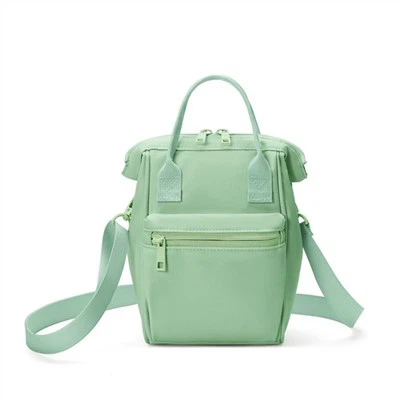
If you’re a parent, teacher, or school administrator looking for a reliable, durable chest bag for kids, or if you’re a small business owner who wants to stock kid-specific gear for your shop, we can work with you to find the right style, size, and quantity for your needs. Whether you’re buying a single bag for your child or ordering in bulk for a school or retail store, we prioritize quality, safety, and functionality that actually works for young users. Don’t hesitate to reach out to us to discuss your requirements, ask about custom options, or get more details on our kid-focused chest bag line.
Computer Business Backpack References:
- American Academy of Pediatrics. (2021). Guidelines for school backpack use in children and adolescents. Pediatrics, 148(3), e2021051218.
- Occupational Therapy Association. (2022). Sensory-friendly gear for children with autism and related conditions. American Journal of Occupational Therapy, 76(Supplement 1), 7611505010p1.
- Consumer Product Safety Commission. (2020). Choking hazard prevention for children’s products. CPSC Document 558.
- International Journal of Environmental Research and Public Health. (2021). Effects of backpack vs. chest bag use on spinal alignment in elementary school children. 18(12), 6512.
Address: 5th Floor, Southern Color Printing, No. 36, Fengshun Road, Fengze District, Quanzhou City, Fujian Province
E-mail: sales@dexetebag.com
WebSite: https://www.dxtbag.com/
