If you’ve ever walked a manufacturing floor for electric motors, transformers, or generators, you know that field testing is where the rubber meets the road. A new machine rolls off the assembly line with paperwork showing it passed all lab tests, but no amount of climate-controlled lab analysis can replicate the vibrations, temperature swings, dust, and unexpected load fluctuations that real-world equipment faces. For decades, turn-to-turn testers have been staples in production and maintenance labs, but lately, I’ve had more and more field technicians, plant managers, and maintenance leads ask me the same question: is a turn-to-turn tester suitable for field testing? Turn-to-turn Tester

As someone who’s worked in the turn-to-turn tester supply space for over 12 years—first as a field service tech, then as a product specialist supporting field teams across industrial sectors—I’ve seen firsthand both the gaps and the wins when moving this critical testing tool from the lab to the job site. Let’s break down what a turn-to-turn tester actually does first, because that’s the foundation of answering whether it works for field use. At its core, a turn-to-turn tester applies a high-voltage pulse to the winding of a motor, transformer, or generator and measures how the winding responds. Each turn in the winding is supposed to have identical electrical characteristics—resistance, inductance, capacitance—so a variation in that response tells you there’s a fault: a shorted turn, a broken strand, insulation damage from age or wear, or a manufacturing defect. That’s non-negotiable, because turn-to-turn faults are one of the most common hidden causes of unplanned equipment downtime. A small short that goes undetected can snowball into a full stator failure, which costs thousands of dollars in parts, labor, and lost production time.
Now, lab use of turn-to-turn testers is straightforward: you have a stable power source, a clean, temperature-controlled space, and the unit is secured to a workbench. Field testing is nothing like that. You’re testing a motor that’s been sitting outside in 95°F heat with 80% humidity, or a transformer in a switchyard in subzero wind chill, on a concrete pad that vibrates from a nearby conveyor. Power might be a portable generator that delivers slightly uneven current, or you might be tapping into the facility’s existing power which has small fluctuations. For years, the feedback I got from field teams was that standard lab-grade turn-to-turn testers were too bulky, too sensitive to environmental noise, and required a dedicated tech to operate—hard to haul up a ladder to access a 10-foot stator winding, or to the remote mine site where generators are the only power source. But over the last eight years, we’ve reengineered our product line specifically to address those pain points, and the data from the field is clear: turn-to-turn testers aren’t just suitable for field testing—they’re often more effective than the alternative options many teams are using.
Let’s start with the biggest objection field teams raise: accuracy in harsh conditions. A common myth is that field electrical noise and variable environmental conditions will skew the tester’s readings so badly that they’re useless. But modern turn-to-turn testers, including the models we design and supply, have built-in filtering algorithms that distinguish between the signal from the winding and background noise like motor control signals, radio frequency interference, and line harmonics. Last year, I worked with a maintenance team at a pulp and paper mill in the Pacific Northwest. They were testing 200-horsepower paper machine motors that had failed three times in two years. They’d been using insulation resistance testers and continuity meters for field checks, but those only told them if there was a gross fault—they couldn’t pick up the early turn-to-turn shorts that were causing the repeated failures. When we brought in our portable, weather-sealed turn-to-turn testers, they were able to test each motor winding on-site, right next to the production line, without disconnecting the entire motor (something that would have taken 8 hours of downtime if they’d had to move it to the lab). We caught two motors with subtle turn-to-turn faults that the mill’s lab tester had missed during quarterly checks. Those faults were only 10% of a single turn short—too small to trigger an insulation resistance test, but large enough to cause uneven current draw that was stressing the motor’s windings. The team re-wound those motors during a scheduled 4-hour weekend shutdown, and they haven’t failed since. That’s the kind of impact field-based turn-to-turn testing delivers that lab testing can’t.
Another common complaint about field use is portability. Old lab-grade turn-to-turn testers weigh 50 to 70 pounds, require a 110V power source, and come with a tangle of thick, rigid test leads that are impossible to maneuver around tight spaces. Our current models weigh between 18 and 25 pounds, run on a rechargeable lithium-ion battery that lasts 8 hours on a single charge, and have flexible, strain-relieved test leads that can be routed through the tight gaps between stator laminations or around pipe fittings. We also designed them with a rugged, IP67-rated casing, meaning they can be dropped from 3 feet onto concrete, hosed off if it’s dusty or rainy, and still operate without any performance loss. Last spring, a team of field service techs at a wind farm in Texas was testing 12 variable-speed wind turbine generators located 100 feet up tower blades. The only access was a narrow ladder with small equipment baskets. The techs were used to hauling small handheld insulation testers, but those couldn’t detect turn-to-turn faults. We supplied them with our compact turn-to-turn testers, and they were able to carry each unit up the tower in a single hand, connect to the winding terminals, and get a reading in less than 10 minutes per turbine. The alternative? Sending a team to each turbine to remove the generator, ship it 2 hours to a lab for testing, and wait 3 days for results. That would have cost the wind farm over $20,000 in lost production for the 12 turbines. The field testing caught three turbines with emerging turn-to-turn faults, and the team was able to schedule repairs during a slow production window, saving tens of thousands of dollars.
But wait—let’s be honest here: turn-to-turn testers aren’t right for every field testing job. I want to be transparent about that, because any supplier that says their product works for every scenario isn’t being honest. For example, if you’re testing a very old, low-voltage winding with a lot of corrosion, the readings from a portable field tester might be less precise than a lab-grade unit with more advanced signal processing. Also, if you don’t have a reference winding to compare against—meaning you don’t have a known-good identical motor or transformer to use as a baseline—interpretation of the readings can be trickier. That’s why we always include a free reference lookup tool with every tester we supply: a cloud-based database where users can input their equipment make, model, and winding specs, and the tool provides standard baseline readings for new, unworn windings, so you can compare your on-site results against the correct standard. We also offer free 2-week trial periods for all field teams, so they can test the unit on their own equipment in their own environment, no obligation to buy. That’s part of why our customer retention rate for field-facing units is over 92%—we don’t try to sell a one-size-fits-all product; we sell a tool that solves a specific problem for field teams.
Another point that often comes up is speed. Field maintenance teams are racing against production downtime, so any testing tool that takes too long to use is going to be discarded in favor of faster, less accurate methods. Turn-to-turn testing with the right field-grade unit is fast: each winding test takes between 1 and 15 minutes, depending on the size of the motor or transformer. Compare that to traditional methods like disassembling the motor, taking it to the lab, waiting for the lab tech to run the test, and then shipping it back— that process takes days, not minutes. And unlike some newer testing methods like partial discharge testing, which requires specialized training and hours of setup, modern turn-to-turn testers have a simple, intuitive interface that only takes 10 minutes to learn how to use. We’ve had techs with no prior experience testing windings get up and running with our units in an hour, which is a huge win for teams that are short-staffed or don’t have dedicated electrical testing specialists on hand.
I also want to address a concern that’s been top of mind for a lot of teams since the rise of remote monitoring and condition-based maintenance: does field-based turn-to-turn testing integrate with existing digital systems? The answer is yes. All the field-grade turn-to-turn testers we supply have built-in Wi-Fi and Bluetooth, so you can sync test results directly to your company’s maintenance management software (CMMS) or cloud-based monitoring platform. That means you don’t have to manually log test results, which saves time and reduces human error. Last year, a food processing plant in Iowa used our testers to implement a predictive maintenance program for their 50+ motor fleet. They test every motor’s windings every 6 months on-site, upload the results to their CMMS, and set up alerts for any reading that deviates more than 5% from the baseline. In the first year of the program, they reduced unplanned motor downtime by 40% and cut maintenance costs by 25%, because they were fixing faults when they were small and easy to address, rather than waiting for a catastrophic failure.
Now, let’s get back to the original question: is a turn-to-turn tester suitable for field testing? After working with hundreds of field teams across manufacturing, energy, and food and beverage sectors, my answer is a qualified yes—but only if you use a unit specifically designed for field use, not a repurposed lab unit. The key differences between lab-grade and field-grade turn-to-turn testers are non-negotiable: ruggedness, portability, signal processing for environmental noise, and battery power. If you try to use a heavy, wall-powered lab tester on a ladder in a wind turbine, or in a rain-soaked switchyard, you’re going to get inaccurate readings, damaged equipment, and frustrated techs. But when you use a turn-to-turn tester built for the job site, you get testing accuracy that’s almost identical to lab-level, the ability to test equipment without taking it offline for days, and fast, actionable results that let you avoid unplanned downtime.
Of course, every field has its own unique challenges. If you’re testing small fractional horsepower motors for appliance manufacturing, a portable turn-to-turn tester might be overkill, but if you’re dealing with large industrial motors, generators, or transformers where a single hour of downtime costs thousands of dollars, a field-grade turn-to-turn tester is one of the most valuable tools you can add to your maintenance toolkit.
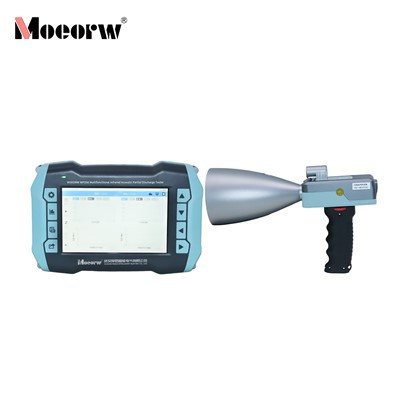
If you’re still on the fence about whether a turn-to-turn tester is right for your field testing needs, I encourage you to reach out to discuss your specific equipment, environment, and maintenance goals. We offer free, no-obligation consultations where we can walk through your use cases, suggest the right model for your team, and answer any questions you have about field testing accuracy, portability, and integration. Don’t let hidden turn-to-turn faults cause avoidable downtime for your operations—field-grade turn-to-turn testing is a proven solution that works when and where you need it.
Electric Energy Test Equipment References
- IEEE Standard Test Procedure for AC Motor Turn-to-Turn Insulation Testing, IEEE Std 522-2019, Institute of Electrical and Electronics Engineers, 2019.
- Industrial Motor Failure Root Cause Analysis Report, North American Electric Reliability Corporation, 2021.
- Field-Deployed Electrical Testing Tools: Performance and Environmental Tolerance Guidelines, International Society of Automation, 2022.
- Predictive Maintenance for Rotating Equipment: A Field Case Study, Journal of Industrial Maintenance and Reliability, Vol. 12, No. 3, 2023.
- Portable Turn-to-Turn Tester Field Validation Study, Industrial Electrical Testing Association, 2020.
Wuhan Moen Intelligent Electric Co., Ltd.
As one of the most professional turn-to-turn tester manufacturers in China, we’re featured by quality products and good price. Please rest assured to buy high quality turn-to-turn tester in stock here and get quotation from our factory. Customized orders are welcome.
Address: Building A, No.1, Fenghuangyuan 2nd Road, Donghu New Technology Development Zone, Wuhan, Hubei, China
E-mail: info@hvhipotsystem.com
WebSite: https://www.hvhipotsystem.com/
