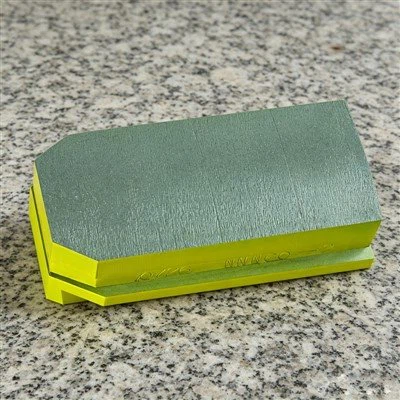
As a supplier of stone grinding discs, I often get asked about the rotational direction of these essential tools. Understanding the correct rotational direction is crucial for achieving optimal results in various grinding applications. In this blog, I’ll delve into the factors that determine the rotational direction of a stone grinding disc, its implications for performance, and why it matters in different industries. Stone Grinding Disc
The Basics of Rotational Direction
The rotational direction of a stone grinding disc refers to the way the disc spins during operation. There are two main types of rotational directions: clockwise and counter – clockwise. The choice of direction is not arbitrary; it depends on several factors, including the type of grinding machine, the nature of the material being ground, and the specific grinding task at hand.
Clockwise Rotation
In many industrial settings, clockwise rotation is the standard for stone grinding discs. This is because most conventional grinding machines are designed to operate with a clockwise – spinning disc. When a disc rotates clockwise, it can effectively cut into the material, removing excess material and shaping the surface. The clockwise motion creates a natural flow of debris away from the operator, enhancing safety and reducing the risk of clogging.
For example, in the marble and granite processing industry, clockwise – rotating grinding discs are commonly used to polish and finish the surfaces of these stones. The disc’s rotation helps to evenly distribute the abrasive action, resulting in a smooth and shiny finish. The clockwise motion also allows for better control over the grinding process, as the operator can easily guide the machine along the surface of the stone.
Counter – clockwise Rotation
Counter – clockwise rotation is less common but has its own set of advantages. In some specialized applications, such as certain types of precision grinding or when working with specific materials, a counter – clockwise rotating disc may be preferred. This is because the counter – clockwise motion can sometimes provide a different cutting action, which can be beneficial for achieving a particular surface finish or for working with materials that are more difficult to grind.
For instance, in the manufacturing of high – precision components, a counter – clockwise rotating grinding disc may be used to achieve a finer surface finish. The reverse rotation can help to reduce the risk of surface damage and improve the overall quality of the finished product. Additionally, in some cases, a counter – clockwise rotating disc can be used to clean or remove stubborn contaminants from a surface.
Factors Influencing Rotational Direction
Machine Design
The design of the grinding machine plays a significant role in determining the rotational direction of the stone grinding disc. Most modern grinding machines are engineered to operate with a specific rotational direction. Manufacturers design the machine’s motor, drive system, and spindle to work in harmony with a particular direction of rotation. This ensures optimal performance and safety during operation.
For example, a bench – top grinding machine may be designed to rotate the disc clockwise, while a large – scale industrial grinding mill may have a counter – clockwise rotation. It is essential to follow the manufacturer’s instructions regarding the rotational direction to avoid damage to the machine and ensure efficient operation.
Material Properties
The properties of the material being ground also influence the choice of rotational direction. Different materials have different hardness, density, and abrasion resistance. For example, soft materials like limestone may require a different rotational direction compared to hard materials like quartz.
Soft materials are generally easier to grind, and a clockwise rotation may be sufficient to achieve the desired results. However, hard materials may require a more aggressive cutting action, which can sometimes be achieved with a counter – clockwise rotation. The type of abrasive used on the grinding disc also plays a role. Some abrasives work better with a specific rotational direction, as they are designed to cut more effectively in that direction.
Grinding Task
The specific grinding task at hand is another important factor. Whether you are rough grinding, fine grinding, or polishing, the rotational direction can affect the outcome. For rough grinding, a more aggressive rotational direction may be needed to remove large amounts of material quickly. In contrast, for fine grinding and polishing, a more controlled rotational direction may be required to achieve a smooth and even finish.
For example, when rough grinding a large block of stone, a clockwise rotation may be used to quickly remove excess material. Once the rough shape is achieved, a counter – clockwise rotation may be used for fine grinding and polishing to achieve a high – quality surface finish.
Implications for Performance
The rotational direction of a stone grinding disc has a direct impact on its performance. Choosing the correct rotational direction can improve the efficiency of the grinding process, enhance the quality of the finished product, and extend the lifespan of the grinding disc.
Efficiency
Using the correct rotational direction can significantly improve the efficiency of the grinding process. When the disc rotates in the optimal direction, it can cut through the material more effectively, reducing the time and effort required to complete the grinding task. This can lead to increased productivity and lower costs in industrial applications.
For example, in a stone quarry, using a clockwise – rotating grinding disc to process large blocks of stone can help to quickly reduce the size of the stones and prepare them for further processing. The efficient cutting action of the disc can also reduce the amount of energy consumed by the grinding machine, resulting in cost savings.
Quality
The rotational direction also affects the quality of the finished product. A properly chosen rotational direction can ensure a smooth and even surface finish, free from scratches and unevenness. This is particularly important in industries where high – quality finishes are required, such as the construction and automotive industries.
For instance, in the production of automotive parts, a counter – clockwise rotating grinding disc may be used to achieve a precise and smooth surface finish on engine components. This can improve the performance and durability of the parts, as well as enhance the overall quality of the vehicle.
Lifespan
The rotational direction can also impact the lifespan of the grinding disc. When the disc rotates in the correct direction, it experiences less wear and tear, as the abrasive particles are used more effectively. This can extend the life of the disc, reducing the frequency of disc replacements and saving costs in the long run.
For example, if a grinding disc is used in the wrong rotational direction, it may cause the abrasive particles to wear out more quickly, leading to a shorter lifespan. By using the correct rotational direction, the disc can maintain its cutting edge for a longer period, resulting in better performance and cost – effectiveness.
Why It Matters in Different Industries
Construction Industry
In the construction industry, stone grinding discs are used for a variety of tasks, including surface preparation, concrete grinding, and stone polishing. The correct rotational direction is crucial for achieving high – quality results. For example, when grinding concrete floors, a clockwise – rotating disc can effectively remove surface imperfections and prepare the floor for coating or tiling.
Manufacturing Industry
In the manufacturing industry, stone grinding discs are used to produce precision components and parts. The choice of rotational direction can affect the accuracy and surface finish of the products. For example, in the production of metal parts, a counter – clockwise rotating disc may be used to achieve a fine surface finish and tight tolerances.
Mining Industry
In the mining industry, stone grinding discs are used to process ores and minerals. The rotational direction can impact the efficiency of the grinding process and the quality of the final product. For example, in the grinding of gold ores, a clockwise – rotating disc may be used to break down the ore into smaller particles, facilitating the extraction of gold.
Conclusion
As a supplier of stone grinding discs, I understand the importance of choosing the correct rotational direction. It is not only a matter of technical performance but also of safety and cost – effectiveness. By considering the factors such as machine design, material properties, and grinding task, users can ensure that they are using the grinding disc in the most efficient and effective way.
Metal Frankfurt Abrasive If you are in the market for high – quality stone grinding discs and need advice on the appropriate rotational direction for your specific application, I invite you to reach out to me. I am more than happy to assist you in selecting the right product and providing you with the necessary guidance to achieve the best results.
References
- ASTM International. (20XX). Standard test methods for abrasives and related products.
- Grinding Machine Manufacturers Association. (20XX). Guidelines for the operation of grinding machines.
- Stone Processing Industry Handbook. (20XX). A comprehensive guide to stone processing techniques.
Quanzhou Cheefung New Materials Co., Ltd.
As one of the most experienced stone grinding disc enterprises in China, we are able to meet the needs of the majority of our customers. Please feel free to wholesale advanced stone grinding disc made in China here from our factory. For price consultation, contact us.
Address: Jinshan Community, Licheng District, Quanzhou City, Fujian, China
E-mail: info@prostonetools.com
WebSite: https://www.prostonetools.com/
