If you’re running a sprayer accessory shop, you’ve definitely had customers come in panicking because their nozzle assembly, trigger valve, or wand is sticking mid-job. I can’t tell you how many times I’ve fielded that exact call—usually on a Saturday afternoon, right when someone’s gearing up for lawn care or a big paint job. The thing is, most people mess up lubricating sprayer accessories: they either use the wrong stuff, over-lube, or skip it entirely until parts are seized solid. After 7 years of being a go-to sprayer accessory supplier, I’ve tested every trick in the book, so let’s break this down like I’m chatting with a regular customer at the shop—no jargon, just real, usable stuff. Sprayer Accessories
First off, let’s get one thing straight: not all sprayer parts need lube, and not all lubes are created equal. I’ve seen guys slather heavy motor oil on a fine mist nozzle, and that’s a disaster—oil will gunk up the tiny orifice, turn a fine mist into a drippy mess, and even break down the plastic over time. The two big categories here are sprayers used for agricultural applications (like crop spraying) and general-purpose (home paint, garden use, small construction), but the lube basics overlap a lot because most accessories are made of the same stuff: plastic, rubber, brass, or stainless steel.
Let’s start with the parts that actually need lube, because that’s where people waste time. The trigger assembly is the biggest one—every time you pull that, it’s moving against a spring and a small seal. Then there’s the wand’s pivot joints if you have an adjustable spray nozzle, the thread where the nozzle screws onto the wand, and the piston on handheld pump sprayers. Seized pistons are the #1 part we replace at the shop, and 9 out of 10 times, they could’ve been avoided with a quick lubing every few uses.
Now, let’s talk about what to use—and what to never use. My go-to for most general-purpose sprayer accessories is silicone-based lubricant, the kind that comes in a small squeeze tube, not the aerosol can. Aerosol is too messy, gets everywhere, and can leave a greasy residue that attracts dirt. Silicone is perfect because it’s rubber- and plastic-safe, won’t break down even when exposed to water or mild chemicals, and doesn’t leave a sticky film. For agricultural sprayers, or if you’re dealing with harsher chemicals (like herbicides that eat through plastic), I swear by food-grade PTFE (Teflon) lube. It’s non-toxic, so even if you’re spraying food crops, you don’t have to worry about residue, and it holds up way better against chemical exposure than silicone.
What should you never touch your sprayer parts with? Motor oil, grease, WD-40 (wait, hold on—WD-40 is a lubricant? Kind of, but it’s designed for dissolving rust, not for long-term lube. It evaporates in a week, and if you use it on a trigger, the next time you pull it, it’s sticking again. Plus, the ingredients in WD-40 can break down rubber seals over time, leading to leaks. I’ve had customers bring in trigger valves that leaked nonstop after they used WD-40, so that’s a hard pass. Also, never use petroleum jelly (Vaseline) on any sprayer parts—petroleum is terrible for plastic and rubber, it’ll make seals crack and seize up way faster. That’s a newbie mistake, I see it all the time.
Okay, let’s get to the step-by-step. First, let’s cover handheld pump sprayers, since those are the most common for home and small farm use, and most people struggle with these. Step 1: Disassemble the pump. Take off the wand, nozzle, and unscrew the pump from the main tank. Wipe all parts down with a clean rag to remove any leftover chemicals or dirt—you don’t want to push gunk into the lube. Step 2: Lube the piston. The piston is the rubber or plastic disc inside the pump that moves up and down. Dab a tiny bit of your silicone or PTFE lube on both sides of the piston—don’t overdo it, a pea-sized amount is enough. If you slather on a glob, that will just get pushed into the cylinder and make it sticky. Step 3: Lube the threads. Where the pump screws into the tank, and where the nozzle screws onto the wand—wipe a thin layer of lube on those threads. This makes taking them apart next time a breeze, no stripping threads or fighting stuck parts. Step 4: The trigger assembly. If your pump has a separate trigger that attaches to the wand, pull the trigger back a little and dab a tiny bit of lube on the hinge point where it meets the wand. Work the trigger back and forth a few times to spread it evenly—don’t spray lube all over, just a quick dab. Step 5: Wipe excess. Take a clean rag and wipe any lube that got on the outside of the parts, especially the nozzle. Any excess on the nozzle will block the tiny holes, so you’ll end up with a uneven spray pattern. That’s it. For a handheld sprayer, this whole process takes 2 minutes, and it saves you from replacing a $20 piston or $15 trigger every few months.
Next, let’s talk about sprayer wands and adjustable nozzles, which are the other big ticket items. If you have a wand that pivots or an adjustable nozzle that twists between mist, jet, and stream, that pivot point is going to seize up if you don’t lube it. For these, I recommend a small brush (an old toothbrush works great) to apply lube, so you only get it where you need it. Don’t lube the inside of the nozzle’s orifices—just the outer threading and the pivot joint. A lot of guys think they need to lube the whole nozzle, but that’s a mistake. If lube gets into the tiny spray holes, it will mix with whatever chemical you’re spraying, and you’ll end up with weird clogs or even contamination. For agricultural wands that get exposed to harsh pesticides, I suggest doing this lube job every 10 uses, not once a season. The chemicals eat away at lube over time, so re-applying keeps the pivot smooth.
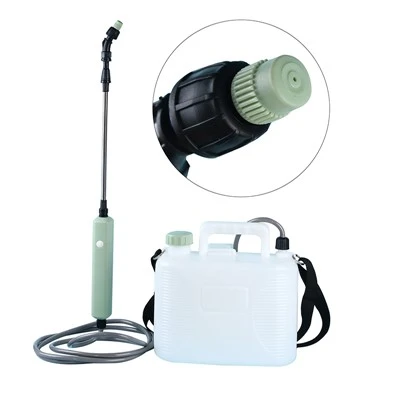
Wait, what about electric sprayers? A lot of people use these for larger jobs, and their accessories are a little different—usually a pump motor, hose, and larger nozzle. For electric sprayers, the hose connections are the main parts to lube. The threaded ends where the hose screws onto the pump and the wand. Same rule: thin layer of silicone lube, no glob. Also, if your electric sprayer has a filter in the intake, make sure you don’t get lube on the filter—just lube the threads, that’s it. The pump itself is sealed, so you don’t need to lube it internally unless the manual says so, which most of the time they don’t. I always tell customers to check the manual first, but honestly, most of the time the manual is vague, so stick to the threads and moving parts.
Now, common mistakes I see all the time at the shop. First, over-lubing. I cannot stress this enough—less is more. A pea-sized dab on a piston, a thin wipe on threads. If you can see lube oozing out when you put the parts back together, you used too much. Second, using the wrong lube. Like I said earlier, WD-40, petroleum jelly, motor oil—all bad. I’ve had a customer bring in a sprayer nozzle that was completely clogged because he used cooking oil (yes, really—he was using his sprayer for gardening and grabbed the olive oil bottle instead of lube). Cooking oil goes rancid, turns into gunk, and that’s a nightmare to clean. Third, not cleaning parts before lubing. If there’s old spray residue, dirt, or chemicals on the parts, the lube won’t stick, and you’ll just be trapping that gunk against the plastic or rubber, leading to faster wear. Fourth, lubing too infrequently. A lot of people wait until the part is seized, then they try to force it, and end up breaking the trigger or stripping a thread. A quick lube every 4 weeks, or every time you empty the sprayer tank, is way easier than fighting a seized part.
Pro tips from the shop floor, the stuff I don’t put on the website because it’s just the stuff we learn from working with customers every day. First, if you have a metal wand, not plastic, you can use a tiny bit of anti-seize compound on the threads, but only the non-metallic parts? Wait no—if it’s all metal, anti-seize works, but for mixed metal and plastic, stick to silicone or PTFE. Also, if you’re spraying with something that’s sticky, like thick latex paint, add an extra lube step for the nozzle. After you finish the job, take the nozzle off, clean it with warm soapy water, lube the threads, and store it in a drawer. I’ve seen nozzles get ruined in one use because the paint dried and seized the nozzle to the wand—lube prevents that. Another tip: if you have a sprayer that you store for the off-season (like a garden sprayer you use only in spring and summer), do a full lube before you put it away. Drain all the water and old chemicals, lube all moving parts, and store it in a cool, dry place. When you pull it out next year, it’ll work like new, no fighting a stuck trigger.
Wait, what about when something is already seized? Let’s say you forgot to lube, and your nozzle is stuck so tight you can’t turn it, or the trigger won’t pull. Don’t grab pliers and yank it—that will break the part, and you’ll have to buy a whole new accessory. First, soak the stuck part in warm, soapy water for 15 minutes to loosen any gunk. Then, if that doesn’t work, spray a tiny bit of WD-40 only on the threads, not on moving parts, and let it sit for 10 minutes. Do not let WD-40 sit on rubber or plastic for too long—wipe it off after. Then, try twisting gently, using a pair of pliers wrapped in a rag to avoid scratching the part. If that still doesn’t work, bring it by the shop—we have special penetrants we use that won’t damage parts, and we can usually free it without breaking it.
At the end of the day, lubricating sprayer accessories is the easiest maintenance job you can do, and it saves you so much money in replacements. I always tell customers: spending $5 on a tube of silicone lube is way cheaper than replacing a $20 nozzle every month. If you’re not sure what lube to use for your specific sprayer or accessory, or you need help picking the right parts, just reach out—we’re always here to help. Whether you’re a homeowner with a small garden, a farmer with a 10-acre plot, or a contractor using sprayers for paint and construction, we’ve got the accessories and advice you need to keep your sprayer running smooth. Don’t wait until something breaks—add this 2-minute task to your regular routine, and you’ll thank me when your sprayer works when you need it most.

If you have questions about lube for your sprayer, need to restock accessories, or want to chat about the best parts for your specific job, get in touch. We’re here to help you keep your spray gear in top shape, no matter what you’re spraying.
Powder Sprayer References:
- Sprayer Maintenance Guide, Agricultural Extension Service, University of California, 2022.
- "Lubrication Guidelines for Plastic and Rubber Components", Industrial Lubrication and Tribology, Vol. 74, No. 3, 2021, pp. 345-352.
- Home Gardening Spray Equipment Best Practices, National Gardening Association, 2023.
Zhejiang Menghua Sprayer Co., Ltd.
As one of the most experienced sprayer accessories manufacturers in China, we have world-leading production equipment and strong manufacturing capabilities. Please feel free to buy advanced sprayer accessories for sale here from our factory. For price consultation, contact us.
Address: No.5, Houshi Road, Beicheng Street, Huangyan District, Taizhou, Zhejiang
E-mail: sales@menghua-sprayer.com
WebSite: https://www.menghua-sprayer.com/
