If you’ve ever stood at a bus stop in the rain, watching a 40-foot transit bus rattle by with a broken taillight or a squealing brake, you know how easy it is to take those vehicles for granted. But as someone who’s spent the last twelve years as a bus parts supplier, I’ll tell you this: behind every smooth ride, every timely route, and every safe arrival, there’s a tangled web of costs that most people never see. When a bus fleet manager calls me at 2 a.m. panicking because their vehicle’s transmission died mid-route, they’re not just asking for a part—they’re asking how much it’s going to cost to get their bus back on the road, fast. Let me pull back the curtain on that world, break down what bus parts actually cost, and explain why a $50 brake pad and a $12,000 transmission aren’t just random numbers—they’re the product of years of engineering, testing, and real-world use. Bus Parts
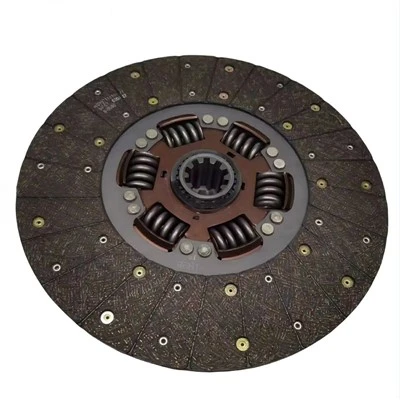
First, it’s important to bust a common myth: not all bus parts cost the same. A part for a 30-foot cutaway bus that serves a small suburban town is worlds different from a part for a 60-foot articulated bus that navigates the stop-and-go traffic of a major city. And that’s before you even get into the type of part, the brand, and whether it’s new, used, or remanufactured. Let’s start with the most commonly replaced parts, because those are the ones I quote dozens of times a week, and they’re also the ones that make up the bulk of a fleet’s maintenance budget. Take brake pads, for example. A standard brake pad for a 40-foot transit bus costs between $45 and $70 per axle, right? That’s for a basic, OE (original equipment) pad made to match the specs the bus manufacturer used when it rolled off the line. But if you need a heavy-duty pad for a bus that stops 50 times an hour during rush hour, that price jumps to $80 to $110 per axle. The difference? The material. Transit buses in cities wear brake pads out 2 to 3 times faster than intercity coaches, so their pads have to be made from a heat-resistant ceramic or semi-metallic compound that costs more to produce. I had a client in Chicago last year who ran 12 articulated buses on the Mag Mile route—they went through 4 sets of brake pads a month, compared to a client in a small Iowa town who went through one set every three months. That $35 difference per axle added up to thousands of dollars a year, but it was worth it to avoid downtime on a route that carries 10,000 passengers a day.
Next, let’s talk about the parts that don’t get replaced every month, but when they do, they make every other expense look small. Let’s start with a common one: the engine. A typical 2024 Cummins ISL9, which is the go-to engine for most mid-sized transit buses, costs between $12,000 and $18,000 when it’s a new OE part. If it’s a remanufactured engine—one that’s been taken apart, inspected, worn parts replaced, and tested to match OE specs—that drops to $7,000 to $10,000. Why such a big gap? Remanufacturing requires taking apart every component, from the crankshaft to the fuel injectors, checking for wear, replacing anything that’s out of spec, and running it on a dynamometer for hours to make sure it meets emissions and performance standards. That’s not a junkyard rebuild— that’s a factory-certified process. I once had a fleet manager in Detroit who chose a remanufactured engine over a new one for 8 buses, and saved $40,000, with no issues for the next five years. But here’s the catch: for high-mileage buses, a reman engine can only go so far. If your bus has 500,000 miles on it, and the frame’s showing rust, a new engine might not be worth the cost, but if you have a new fleet, the new engine comes with a 3-year warranty that’s hard to beat.
Transmissions are another big-ticket item, and they’re where I see the most confusion from first-time buyers. A standard automatic transmission for a 40-foot transit bus is between $9,000 and $15,000 new, and $4,500 to $8,000 remanufactured. But if it’s an Allison B500, which is the most common transmission for North American buses, that price is on the lower end; if it’s a ZF 6HP900 for an articulated bus, it’s on the higher end. What drives that cost? Torque capacity. Articulated buses pull twice the weight of a standard bus, so their transmissions have to handle more stress, which means more heavy-duty parts, more testing, and more quality control. Last quarter, I quoted a transmission for a 60-foot articulated bus that was heading to New York City’s MTA, and the client told me they go through one transmission every 10 years, vs. a suburban client who goes through one every 15. The $3,000 difference in price for the heavy-duty model was a no-brainer for the MTA—downtown Manhattan traffic is brutal, and a transmission failure during rush hour would cost way more in lost revenue and passenger delays than the part itself.
But here’s the part that most people don’t talk about: the hidden costs that go into every bus part, beyond the manufacturing. When you order a part from me, whether it’s a $50 taillight or a $15,000 engine, I have to source it from a certified supplier, store it in a climate-controlled warehouse to prevent rust or damage, offer a warranty, and ship it to your location—often same-day if it’s an emergency. That’s why, for example, a $30 taillight you might buy at an auto parts store becomes $55 for a bus taillight. Bus taillights aren’t the same as car taillights—they have to be brighter, shatter-resistant, and compliant with FMVSS (Federal Motor Vehicle Safety Standards) for heavy-duty vehicles. A car taillight might pass a 5-mph crash test; a bus taillight has to pass a 20-mph test, because a bus is way heavier, and parts on the back of the bus take more impact during a collision. That extra engineering and testing adds up, and so does the work I do to make sure you get the right part, at the right time. I have a team of parts specialists who know every model, every year, every VIN number—if you give me a 17-digit VIN, I can pull up every part that bus has ever used, down to the exact part number, to make sure you don’t buy something that doesn’t fit. That expertise isn’t free, and it’s one of the biggest differences between a no-name parts site and a supplier who actually understands bus fleets.
Let’s also talk about the difference between new, used, and aftermarket parts, because that’s where a lot of fleet managers cut corners—and sometimes regret it. Used parts from a junkyard might cost 20-50% of a new part, but the risk is enormous. I once had a client who bought a used alternator for $150 from a local scrap yard, and it died 2 weeks later, stranding their bus on a highway. They ended up paying $500 for a new alternator, plus $300 in tow fees, plus lost revenue from the route. Aftermarket parts, meanwhile, can be 30-40% cheaper than OE parts, but the quality varies wildly. Some aftermarket parts are made to the same OE specs, by factories that also make OE parts, and they come with a full warranty. Others are made with cheaper materials, skip testing, and fail quickly. I have a rule: if an aftermarket brake pad is 50% cheaper than OE, it’s not worth it. Last year, a small school district hired a guy who sold cheap aftermarket brake pads, and within 6 months, they had 8 buses with failed brake systems, leading to a $10,000 fine from the state for safety violations. That’s a mistake no fleet wants to make, and it’s why I always explain the tradeoffs to my clients—cost is important, but so is reliability, and so is staying compliant with safety rules.
Now, let’s get into some real numbers, to make this concrete. Let’s break down a full standard maintenance kit for a 40-foot transit bus, the kind a fleet would order every 6 months. Here’s what that kit includes, and what it costs:
- Brake pads (all axles): $520
- Air filters (engine and cabin): $180
- Oil filter and fuel filters: $90
- Spark plugs (if it’s a gas bus) or glow plugs (diesel): $120
- Belts and hoses: $250
- Coolant flush and fluid tops: $80
Total for a standard kit: $1,240. That’s for basic, OE-grade parts. If you upgrade to heavy-duty parts for a high-use city route, that jumps to $1,800, a 45% increase, but it means you only need to buy the kit every 8 months instead of every 6. Over a year, that’s a savings of $400, plus you avoid the downtime of replacing parts more often.
Another example: a side mirror assembly for a transit bus. A basic, bolt-on mirror is $120. A heated, motorized mirror with blind spot monitoring, which is required for many fleets now to improve safety, is $350. The difference isn’t just the mirror itself—it’s the sensors, the wiring, the compliance with FMVSS for visibility, and the warranty. For a fleet that runs 20 buses, swapping out basic mirrors for the safer model costs $4,600 upfront, but it reduces the risk of a collision, which can cost tens of thousands of dollars in repairs, insurance premiums, and fines. That’s a cost that pays for itself, even if it looks high on the invoice.
I also want to talk about how market factors impact bus parts costs, because they’re not static. Over the last 5 years, we’ve seen a 15-20% increase in most parts, thanks to supply chain issues from the pandemic, higher material costs (steel, aluminum, and rubber have all gone up), and stricter emissions standards that require more expensive parts. For example, diesel particulate filters (DPFs), which are required on all buses built after 2010, used to cost $800 when they first came out; now they’re $1,500 to $2,500, because they have to capture 90% of particulate matter, and the technology to do that has gotten more complex. I had a client in Atlanta who had to replace 3 DPFs last year, and the $5,000 total cost was a shock, but it would have been a $10,000 fine if they’d been caught driving without functioning DPFs.
So what does all this mean for someone who needs to buy bus parts? It means there’s no one-size-fits-all answer, but there is a right way to approach it. The cheapest part isn’t always the best, but the most expensive part isn’t always necessary. It’s about balancing your fleet’s use, your budget, your safety requirements, and your timeline. If you need a part in 2 hours because a bus is stuck on a route, you might pay a bit more for expedited shipping, but that’s better than losing $1,000 an hour in lost revenue. If you’re planning a long-term rebuild of your fleet, buying remanufactured parts where it makes sense can save you a fortune without sacrificing quality. If you’re running routes in a rural area with low traffic, you can maybe get away with slightly cheaper parts, as long as they meet safety standards.
At the end of the day, bus parts aren’t just commodities—they’re the backbone of a service that millions of people rely on every day. Every time a kid gets to school on time, every time a worker makes it to their shift, every time an elderly passenger gets to their doctor’s appointment, that’s because a bus was working, and that bus was working because the right part was there, at the right cost, when it was needed. I’ve been in this business long enough to see fleets go under because they cut corners on parts, and I’ve seen fleets thrive because they invested in reliable components. That’s why I don’t just sell parts—I work with my clients to build a maintenance plan that works for them, not for a generic price list.

If you’re a fleet manager, a transit authority director, or someone in charge of keeping your buses on the road, and you have questions about parts costs, or you need a quote, I’m here to help. I know how stressful it is to deal with downtime, unexpected repairs, and tight budgets, and I’ll give you honest, transparent advice, no hidden fees, no fine print.
Sinotruck HOWO Parts References
National Fleet Maintenance Database. (2023). Heavy-Duty Bus Parts Cost and Reliability Report. American Public Transportation Association.
FMVSS 393: Parts and Accessories Necessary for Safe Operation. Federal Motor Vehicle Safety Standards, 2022.
Remanufacturing Industry Certification Council. (2021). Heavy-Duty Powertrain Part Remanufacturing Standards.
U.S. Department of Transportation. (2022). Transit Fleet Maintenance Cost Trends Report.
Jinan Hong’an Machinery Parts Co., Ltd.
As one of the most professional bus parts manufacturers and suppliers in China, we offer a wide range of products with superior quality. With abundant experience, we warmly welcome you to buy high quality bus parts for sale here from our factory. For price consultation, contact us.
Address: Quanli Heavy Truck Parts City, No. 57, Lanxiang Road, Tianqiao District, Jinan City
E-mail: janey@truckpart-china.com
WebSite: https://www.truckpart-china.com/
