If you’ve ever been in the market for a refrigerated truck, whether you’re a small local grocery chain restocking a handful of neighborhood stores, a specialty meal kit service dropping off fresh produce to apartment buildings, or even a craft brewer delivering kegs to taprooms across a city, you’ve probably found yourself asking: What’s actually the smallest refrigerated truck I can get? As someone who’s been in the refrigerated truck supply game for years, I get it—bigger isn’t always better. A full-size reefer rig might seem like the default, but for urban routes, tight loading docks, or small-volume runs, it’s overkill. Plus, it’s a waste of fuel and space, which cuts into your bottom line. So let’s break this down, no fancy jargon, just real talk about what’s out there and what makes sense for your business. Refrigerated Truck
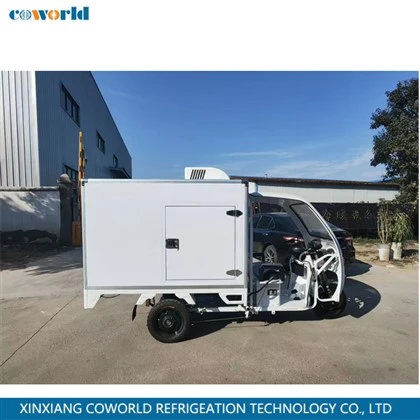
First, let’s clear up one thing: when we talk about “smallest refrigerated truck,” we’re not mixing up box trucks with smaller cargo vans that have a cooling unit bolted in—though those are often what people mistakenly call “mini reefers.” Wait, let’s be honest, I’ve had customers call anything with a fridge a refrigerated truck, but for our purposes, a truck is a vehicle with a gross vehicle weight rating (GVWR) over 10,000 pounds, right? Cargo vans are under that, so they’re a separate category. But if you really need that truck distinction, let’s start with the lightest end of the truck spectrum. Most mini refrigerated trucks these days are Class 3, which maxes out at 12,000 pounds GVWR. That’s a step above the light-duty cargo vans (Class 1 and 2, under 10,000 pounds) and way smaller than Class 6 or 7 semi-tractors that haul 20+ foot boxes.
Why Class 3? Because it’s the sweet spot for small businesses. These trucks are often built on a standard chassis cab—think the same frame as a common work truck, like a Ford Transit or Mercedes-Benz Sprinter, but with a purpose-built refrigerated box instead of a passenger or utility body. The box itself is usually between 10 and 14 feet long. Wait, 10 feet? Yeah, that’s not a typo. I’ve supplied a few 10-foot Class 3 reefers to local flower shops that deliver custom bouquets and potted plants—those tight boxes keep blooms at the perfect 38 to 40 degrees, and the whole truck is narrow enough to fit down alleyways that full-size trucks can’t even navigate. Last year, a craft coffee roaster in Portland bought a 12-foot Class 3 reefer to deliver cold brew and single-origin beans to 15 cafes a week—they used to rent cargo vans, but the extra cargo space let them cut their trips from two a day to one, saving them hours and a ton on gas.
But hold on, some of you are still thinking, “Can’t I get even smaller? What about under 10,000 pounds?” Fair question. That’s the Class 1 and 2 range, which is where the refrigerated cargo vans live. A lot of people group these with refrigerated trucks, and honestly, if your needs are super small—like delivering frozen meals to residential customers or restocking a single bodega twice a week—these might be all you need. The smallest of these is usually an 8-foot cargo box on a compact van, with a built-in cooling unit that runs off the van’s battery (no need for a separate generator, which is a huge plus for low-volume runs). I’ll be real with you, though: these aren’t ideal for regular business use. If you’re hauling more than 1,500 pounds of freight, or you’re doing multiple stops a day for 5 days a week, the van’s engine and battery will take a beating. Plus, in rainy or cold weather, some of the cheaper cooling units struggle to hold temperature, which is a risk if you’re hauling perishables. So they’re a solid stopgap, but not a long-term solution for most growing businesses.
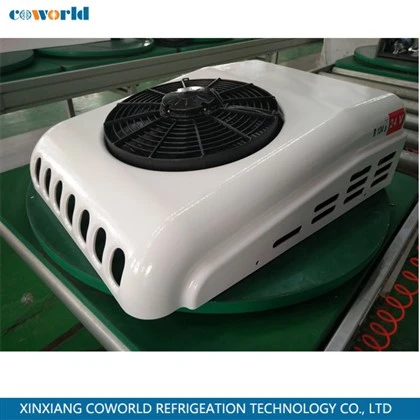
Now, let’s talk about what makes a mini refrigerated truck actually work—because not every small reefer is created equal. The cooling unit is the big one. For Class 3 and smaller, you don’t need a giant diesel-powered generator like the ones on semi reefers. Most modern mini reefers use either a standby unit that plugs into an external power source when parked (great for loading docks that have outlets) or a self-contained unit with a small electric compressor that runs off the truck’s alternator or a separate lithium-ion battery. Wait, lithium-ion batteries are a game-changer here—my team started switching to units with 12V lithium packs about three years ago, and they’ve cut maintenance calls by 40% because there’s no more messing with lead-acid batteries dying in cold weather. Also, the insulation on the box matters. You don’t need a 2-inch thick insulation for a 10-foot box, but you do need at least 1.5 inches of closed-cell foam insulation. If the insulation is cheap, cool air will leak out, and your fuel costs will skyrocket. I’ve seen customers buy cheap mini reefers from no-name manufacturers for $20k that ended up costing them $500 a month extra in fuel because the insulation was garbage—don’t do that.
Another thing to consider is payload capacity. When you shrink the truck and the box, you’re limited by how much weight you can carry. A Class 3 mini reefer with a 12-foot box usually has a payload of around 3,500 to 4,000 pounds. That’s enough for 200 cases of soda, or 100 grocery bags, or a mix of frozen and fresh produce. But if you’re trying to haul heavy stuff like cases of beer or bulk frozen meat, you might want to size up to a 16-foot Class 4 reefer, which maxes out at 16,000 pounds GVWR and has a payload of 6,000 pounds. The difference is small, but it’s enough that my buddy who runs a craft brewery in Seattle swears by his 14-foot Class 3 reefer for keg runs, while his competitor uses a 16-foot for palletized shipments to regional distributors.
Wait, let’s also address some common myths I hear all the time. First: “Mini reefers can’t hold temperature for long hauls.” No, that’s not true. If you have a good cooling unit and insulated box, a mini reefer can hold temperature for 10 hours or more—perfect for runs between a warehouse and a city 200 miles away. I’ve had a customer use his 12-foot reefer to haul fresh berries from Central California to Los Angeles, 4 hours each way, and he’s never had a temperature complaint. Second: “They’re not road-legal.” For Class 3 and above, they’re fully regulated by the FMCSA (that’s the US Federal Motor Carrier Safety Administration, for anyone who doesn’t know), so they have the same safety requirements as any other truck—brakes, lights, seatbelts, all that. The smaller vans (Class 1 and 2) are also legal, but you don’t need a CDL to drive them, which is a huge plus for small business owners who don’t want to hire a truck driver with a commercial license. That’s a big one—if you’re the owner-operator and only need one truck, a Class 2 or 3 reefer means you don’t have to spend time and money getting a CDL, or paying someone else to drive.
Now, let’s get real about who actually needs the smallest refrigerated truck. If you’re: A local caterer doing drop-off for events within 50 miles, a small-scale seafood supplier delivering to restaurants in your metro area, a meal prep service with 20 to 50 daily delivery stops, or a flower shop that does same-day local deliveries—then a 10 to 12 foot Class 3 reefer is exactly what you need. It’s maneuverable, cheap to operate, fits in small parking spots, and has just enough space for your freight. If you’re doing long hauls, palletized loads, or runs to multiple states, then you might need a bigger truck—no shame in that. But for 90% of the small and medium businesses I work with, the mini reefer is more than enough, and it saves them thousands a year in operating costs.
I should also mention that there are custom options, too. My team does a lot of build-to-order mini reefers for customers with specific needs. For example, a customer in Miami who delivers ice cream scoops and frozen desserts wanted a reefer with glass doors so customers could see the products during delivery—we installed rear glass panels and a small internal light, and it worked perfectly. Another customer who runs a vaccine courier service needed a mini reefer that could hold a precise 36 degrees for medical samples, so we added a digital temperature monitor that syncs to his phone, so he can check the temperature anytime, anywhere. That’s the cool part about working with a supplier that listens—you don’t have to settle for a one-size-fits-all reefer.
Wait, let’s circle back to the original question: what’s the smallest available? Based on what’s currently on the market, the absolute smallest refrigerated truck that meets FMCSA safety standards (i.e., a proper truck, not just a modified van) is a 10-foot Class 3 reefer. The smallest refrigerated vehicle overall is a modified cargo van with an 8-foot box, but as we talked about, that’s more of a delivery van than a truck for regular business use. I’d say if you’re serious about refrigerated deliveries and want something that will last 10+ years, the 10-foot Class 3 is your go-to, with the 12-foot being the most popular because it gives you a little extra space without losing maneuverability.
Now, before I wrap this up, let’s talk about why you shouldn’t just buy the cheapest option you find. I’ve had customers come to me after buying a used mini reefer from a private seller or a no-name online supplier, and they end up with broken cooling units, leaky boxes, or no warranty. When you work with a reputable supplier like mine, you get a warranty on the cooling unit and the box, ongoing maintenance support, and the ability to customize the truck to your exact needs. Also, fuel efficiency is a big deal—smaller trucks have smaller engines, so they get way better gas mileage than full-size reefers. A Class 3 reefer gets around 15 to 18 MPG, while a semi reefer gets 6 to 8 MPG. Over a year, that’s thousands of dollars saved in fuel alone.
If you’re still on the fence about whether a mini refrigerated truck is right for your business, or if you want to learn more about the smallest models we have available, feel free to reach out. We can walk you through payload options, cooling unit types, customization, and even help you figure out if you need a slightly bigger or smaller truck based on your typical runs. No pressure, no salesy nonsense—just honest advice from someone who’s been in this industry long enough to know what works and what doesn’t.
Rootop Refrigeration Unit References:
- Federal Motor Carrier Safety Administration. (2023). Gross Vehicle Weight Rating (GVWR) Classifications. FMCSA.gov.
- North American Commercial Vehicle Dealers Association. (2022). Light-Duty Refrigerated Truck Market Report. NACVDA.org.
- Refrigerated Transporter Magazine. (2023). Mini Reefer Cooling Unit Performance Review. RTMag.com.
Xinxiang Coworld Refrigeration Technology Co., Ltd.
As one of the most professional refrigerated truck manufacturers and suppliers in China, our products have good reputation in the market. We warmly welcome you to buy cheap refrigerated truck for sale here from our factory. If you have any enquiry about cooperation, please feel free to email us.
Address: B103 ROOM, GT CITY, NO.199 ZHENGZHONG ROAD, HIGH TECH ZONE, XINXIANG CITY, HENAN PROVINCE, CHINA
E-mail: coworldfrio@hotmail.com
WebSite: https://www.coworldthermo.com/
