In the realm of precision manufacturing, horizontal machining centers stand as cornerstones of efficiency and accuracy. As a seasoned supplier of horizontal machining centers, I’ve witnessed firsthand the transformative impact these machines have on various industries. One of the most common questions I encounter from clients is about the difference between 3-axis and 5-axis horizontal machining centers. In this blog, I’ll delve into the intricacies of these two types of machining centers, highlighting their unique features, applications, and benefits. Horizontal Machining Center
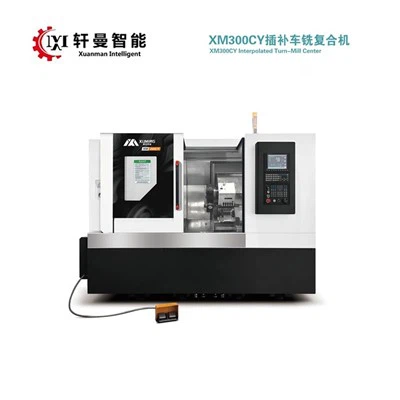
Understanding 3-Axis Horizontal Machining Centers
Let’s start with the basics. A 3-axis horizontal machining center operates along three linear axes: X, Y, and Z. The X-axis typically represents the left-to-right movement, the Y-axis denotes the forward-and-backward motion, and the Z-axis corresponds to the up-and-down movement. These axes allow the cutting tool to move in a three-dimensional space, enabling the machining of complex parts with relative ease.
One of the primary advantages of 3-axis horizontal machining centers is their simplicity and cost-effectiveness. They are relatively easy to operate and maintain, making them an ideal choice for small to medium-sized businesses or those with limited machining requirements. Additionally, 3-axis machines are generally more affordable than their 5-axis counterparts, making them a popular option for budget-conscious manufacturers.
3-axis horizontal machining centers are well-suited for a wide range of applications, including milling, drilling, and boring operations. They are commonly used in industries such as automotive, aerospace, and general manufacturing to produce parts with simple geometries, such as blocks, plates, and shafts. These machines can achieve high levels of precision and repeatability, ensuring consistent quality in the production process.
However, 3-axis machines do have some limitations. Since they can only move along three linear axes, they are restricted in their ability to machine complex shapes and contours. For parts with intricate geometries or multiple sides that need to be machined, additional setups and operations may be required, which can increase production time and cost.
Exploring 5-Axis Horizontal Machining Centers
In contrast, 5-axis horizontal machining centers offer a higher degree of flexibility and versatility. In addition to the three linear axes (X, Y, and Z), 5-axis machines also have two rotational axes, typically denoted as A and B. These rotational axes allow the cutting tool to approach the workpiece from multiple angles, enabling the machining of complex parts with a single setup.
One of the key advantages of 5-axis horizontal machining centers is their ability to reduce setup time and increase productivity. By eliminating the need for multiple setups and repositioning of the workpiece, 5-axis machines can significantly reduce production time and improve efficiency. This is particularly beneficial for parts with complex geometries or multiple features that would otherwise require multiple operations on a 3-axis machine.
Another advantage of 5-axis machines is their ability to achieve higher levels of precision and surface finish. The additional rotational axes allow the cutting tool to maintain a constant angle of attack, resulting in smoother cuts and better surface quality. This is especially important for industries such as aerospace and medical, where precision and quality are critical.
5-axis horizontal machining centers are also well-suited for applications that require high levels of accuracy and repeatability. They can be used to produce parts with complex geometries, such as turbine blades, impellers, and molds. These machines can also be used for multi-sided machining, allowing for the production of parts with multiple features in a single setup.
However, 5-axis machines are generally more complex and expensive than 3-axis machines. They require more advanced programming and operator skills, and they may also require additional maintenance and calibration. Additionally, the cost of purchasing and operating a 5-axis machine is typically higher than that of a 3-axis machine, which may make them less suitable for small to medium-sized businesses or those with limited budgets.
Comparing 3-Axis and 5-Axis Horizontal Machining Centers
Now that we’ve explored the features and benefits of 3-axis and 5-axis horizontal machining centers, let’s compare them side by side to understand their differences more clearly.
Precision and Complexity
In terms of precision and complexity, 5-axis horizontal machining centers have a clear advantage over 3-axis machines. The additional rotational axes allow for more precise control of the cutting tool, enabling the machining of complex shapes and contours with greater accuracy. This makes 5-axis machines ideal for applications that require high levels of precision and surface finish, such as aerospace and medical manufacturing.
On the other hand, 3-axis machines are better suited for applications that require simple geometries and less complex machining operations. While they can achieve high levels of precision, they are limited in their ability to machine complex parts without multiple setups and operations.
Productivity and Efficiency
When it comes to productivity and efficiency, 5-axis horizontal machining centers offer significant advantages over 3-axis machines. The ability to machine complex parts with a single setup reduces production time and eliminates the need for multiple operations, resulting in higher productivity and lower costs. Additionally, 5-axis machines can achieve faster cutting speeds and feeds, further improving efficiency.
In contrast, 3-axis machines may require multiple setups and operations to machine complex parts, which can increase production time and cost. However, for simple parts with straightforward geometries, 3-axis machines can be just as efficient as 5-axis machines.
Cost and Investment
The cost of purchasing and operating a horizontal machining center is an important consideration for any manufacturer. In general, 5-axis horizontal machining centers are more expensive than 3-axis machines due to their increased complexity and advanced features. The cost of purchasing a 5-axis machine can be significantly higher, and the cost of maintenance and operation may also be higher.
On the other hand, 3-axis machines are generally more affordable and easier to operate and maintain. They are a good option for small to medium-sized businesses or those with limited budgets. However, it’s important to note that the cost of a machining center should be considered in relation to the specific needs and requirements of the business.
Choosing the Right Machining Center for Your Business
When choosing between a 3-axis and 5-axis horizontal machining center, it’s important to consider your specific needs and requirements. Here are some factors to consider:
Part Complexity
If you need to machine complex parts with intricate geometries or multiple features, a 5-axis horizontal machining center may be the better choice. The additional rotational axes allow for more precise control of the cutting tool, enabling the machining of complex shapes and contours with greater accuracy.
On the other hand, if you need to machine simple parts with straightforward geometries, a 3-axis horizontal machining center may be sufficient. These machines are more affordable and easier to operate and maintain, making them a good option for small to medium-sized businesses or those with limited machining requirements.
Production Volume
If you need to produce a large volume of parts, a 5-axis horizontal machining center may be more efficient. The ability to machine complex parts with a single setup reduces production time and eliminates the need for multiple operations, resulting in higher productivity and lower costs.
On the other hand, if you need to produce a small volume of parts, a 3-axis horizontal machining center may be sufficient. These machines are more affordable and easier to operate and maintain, making them a good option for small to medium-sized businesses or those with limited production requirements.
Budget
The cost of purchasing and operating a horizontal machining center is an important consideration for any business. If you have a limited budget, a 3-axis horizontal machining center may be the better choice. These machines are more affordable and easier to operate and maintain, making them a good option for small to medium-sized businesses or those with limited budgets.
On the other hand, if you have a larger budget and need to machine complex parts with high precision and surface finish, a 5-axis horizontal machining center may be worth the investment. The increased productivity and efficiency of these machines can result in significant cost savings over the long term.
Conclusion
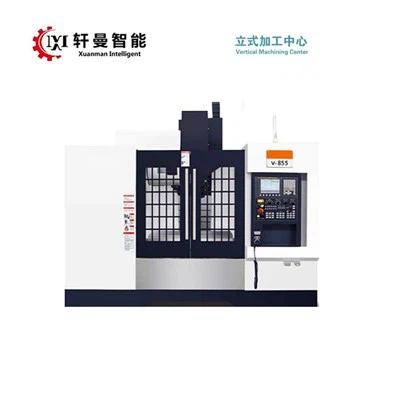
In conclusion, the choice between a 3-axis and 5-axis horizontal machining center depends on your specific needs and requirements. Both types of machines have their own advantages and disadvantages, and it’s important to carefully consider these factors before making a decision.
CNC Drilling Tapping Machine As a supplier of horizontal machining centers, I’m here to help you choose the right machine for your business. Whether you need a 3-axis or 5-axis machine, I can provide you with the information and support you need to make an informed decision. If you’re interested in learning more about our horizontal machining centers or have any questions, please don’t hesitate to contact me. I look forward to working with you to find the perfect solution for your manufacturing needs.
References
- "Machining Technology: An Introduction" by Robert L. Nisbett
- "CNC Programming Handbook" by Walter Kaufman
- "Advanced Manufacturing Technology" by David A. Dornfeld
Jiangsu Xuanman Intelligent Equipment Co., Ltd.
We’re well-known as one of the leading horizontal machining center manufacturers in China, featured by quality products and low price. Please rest assured to buy discount horizontal machining center made in China here from our factory. We also accept customized orders.
Address: No. 1-1, Weier Road, Jieji Equipment Manufacturing Industrial Park, Sihong County, Suqian City, Jiangsu Province, China
E-mail: jsxmzn@163.com
WebSite: https://www.xm-cnc.com/
