If you’ve ever walked past a patio furniture store, fished from a pier, or watched someone string lights for an outdoor event, chances are you’ve come across twisted nylon yarn without realizing it. As a supplier of this material, I get tons of questions from customers—whether they’re textile manufacturers, outdoor gear brands, or small business owners—all asking the same thing: “Is twisted nylon yarn UV resistant?” It’s a fair question, too, because when you’re building something that lives outside, durability against the sun isn’t just a nice-to-have—it’s non-negotiable. Twisted Nylon Yarn

Let’s start by breaking down what twisted nylon yarn actually is. Unlike single-filament nylon, which is a single, smooth strand, twisted nylon is made by twisting two or more nylon filaments together. That twist creates tension strength, improves abrasion resistance, and gives the yarn a more consistent, textured profile. It’s used in everything from outdoor ropes and netting to upholstery for patio cushions and even the edges of backpacks that get dragged over sidewalks. So, why does UV resistance matter here? The sun’s ultraviolet (UV) rays have a sneaky way of breaking down polymer molecules over time. For nylon, which is a polyamide polymer, that process is called photo-degradation.
At its core, pure, unmodified nylon isn’t naturally UV resistant. That might sound counterintuitive—nylon is known for being tough, after all—but the science checks out. When UV rays hit the molecular structure of nylon, they excite the bonds between the carbon and nitrogen atoms in the polyamide chain. Over repeated exposure, those bonds start to break, leading to a chain reaction that weakens the yarn. What does that look like in real life? You might notice your outdoor nylon netting starts to fray unevenly, your patio rope loses its strength and snaps under a light load, or even twisted nylon upholstery fabric starts to fade, peel, or develop tiny, brittle tears after a summer of sun exposure.
But here’s the thing: as a twisted nylon yarn supplier, I don’t just sell pure nylon. We work with our manufacturers to modify the material to boost UV resistance, and that’s where the line between “unprotected” and “UV-resistant” gets drawn. The most common modification is adding UV stabilizers during the extrusion process (that’s the step where nylon resin is melted and formed into filaments). These stabilizers act like a shield for the polymer molecules. Some work by absorbing UV rays, converting that energy into harmless heat that doesn’t damage the nylon. Others work by scavenging the free radicals that are released when UV rays break bonds, stopping the chain reaction before it can weaken the material.
We also offer a line of solution-dyed twisted nylon yarn, which is another key player in UV resistance. Solution dyeing means the pigment is mixed into the nylon resin before the filaments are extruded, rather than being applied to the surface of the yarn after it’s made. Surface-applied dyes fade fast in the sun, but solution-dyed pigments are distributed evenly throughout the entire filament, so they don’t wash out or wear off. For customers making outdoor products, this is a big deal—not only does it prevent fading, but the pigments can also work in tandem with UV stabilizers to add an extra layer of protection. We’ve tested our solution-dyed, UV-stabilized twisted nylon yarn in accelerated weathering chambers, which mimic years of sun exposure in a matter of weeks. Our standard line can withstand over 1,500 hours of UV exposure without losing more than 10% of its tensile strength, while our heavy-duty outdoor line hits over 2,500 hours—way more than the average patio rope or netting will see in its lifetime.
Of course, no UV-resistant material is indestructible. There are a few factors that can affect how well twisted nylon holds up outdoors, even with stabilizers. First, the denier (that’s the measure of a yarn’s thickness) matters. Thicker, higher-denier twisted nylon has more polymer molecules and more room for stabilizers, so it tends to hold up better than thin, low-denier yarn. Second, how the yarn is used makes a difference. If your product is constantly stretched, twisted, or exposed to moisture (like a pier rope that’s in saltwater), that can speed up photo-degradation. Moisture actually makes the UV damage worse, because it can penetrate the small cracks that form in the weakened nylon, leading to more breakage. Third, storage matters—if you stock your twisted nylon yarn in a dark, dry warehouse, it will last much longer than if you leave it out in direct sunlight before you even use it. I always tell customers that UV resistance isn’t a set-it-and-forget-it trait; it works best when paired with proper use and storage.
I’ve seen firsthand what happens when customers skip the UV-stabilized version. Last year, we had a small boat equipment manufacturer come to us after a bad season: their original twisted nylon mooring ropes, made with unmodified nylon, were fraying after just six months on the water. They’d bought a cheaper, non-UV-stabilized yarn to cut costs, and by mid-summer, the ropes were too weak to hold their boats. We switched them to our heavy-duty UV-stabilized twisted nylon, and this year, they reported no issues—even after 10 months of year-round sun and saltwater exposure. On the flip side, I also work with a brand that makes decorative garden netting, and they’ve used our standard UV-stabilized twisted nylon for three years now. Their netting still looks vibrant and intact, even though it’s strung across their garden every summer.
Another common question I get: is twisted nylon yarn’s UV resistance the same as other nylon products? The short answer is no, because the twist itself doesn’t affect the molecular structure’s ability to resist UV rays, but it can affect how the material performs when damaged. If a single filament nylon is weakened by UV rays, it might break completely, but the twisted structure of twisted nylon means even if one filament starts to fray, the others hold the yarn together longer. That makes the twisted version a better choice for outdoor use, because it gives you time to replace the product before it fails, rather than having it snap unexpectedly.
We also offer custom formulations for customers with specific needs. Some of our customers make snow shovels, which are exposed to cold sun—UV rays don’t stop in winter, and cold can actually make nylon more brittle, so we adjust our stabilizers to work in low temperatures. Others make awnings that need to be fade-resistant, so we work with them to match specific color pigments that hold up even in extreme sun. As a supplier, I think it’s important to remember that one size doesn’t fit all when it comes to twisted nylon and UV resistance. What works for a patio rope might not work for a marine net, so we take the time to talk through each customer’s use case to recommend the right product.
I should also mention the myths out there. Some people think that all nylon is UV resistant, and others think that adding any kind of coating will make it UV resistant. But coatings (like PVC coatings) can actually trap moisture against the nylon, leading to mold or mildew, which is a different kind of damage. Our UV stabilizers are integrated into the nylon itself, so they don’t add a thick layer that can cause that kind of issue. And unmodified nylon—even if it’s thick—will break down faster than stabilized nylon, sometimes in as little as a few months of full sun exposure.
At the end of the day, when you’re choosing twisted nylon yarn for outdoor use, the answer to “Is it UV resistant?” depends on two things: how it’s made, and what modifications it has. Pure nylon, on its own, won’t stand up to long-term sun exposure, but with the right stabilizers and formulation, it can be one of the most durable options for outdoor applications. As a supplier, I don’t just sell yarn— I work with my customers to make sure they get the right material for their project, so they don’t have to deal with the frustration of products that fail before their time.
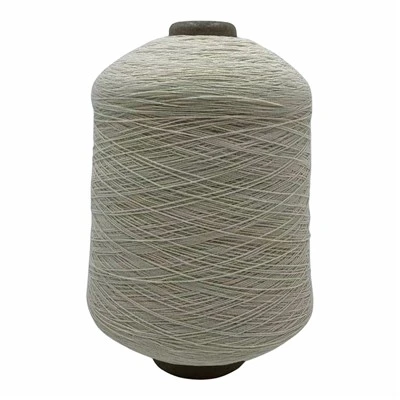
If you’re in the market for twisted nylon yarn and you’re worried about UV resistance, or if you’re not sure which formulation is right for your outdoor product, I’d love to chat. We can go over your specific needs, test samples, and make sure you’re getting a product that will hold up to whatever the sun throws at it. Don’t waste time and money on subpar materials that won’t last—reach out today to talk through your requirements and find the perfect twisted nylon yarn for your project.
Air Polyester Covered Yarn References
- Seymour, R. B., & Carraher, C. E. (2012). Polymer Chemistry (3rd ed.). CRC Press.
- American Society for Testing and Materials (ASTM). (2018). Standard Practice for Xenon Arc Exposure of Textile Materials (ASTM D4329-18). ASTM International.
- Horrocks, A. R., & Anand, S. C. (2000). Handbook of Technical Textiles. Woodhead Publishing.
- National Institute of Standards and Technology (NIST). (2005). Photo-degradation of Polymeric Materials: Principles and Applications. NIST Special Publication 960.
Zhuji Yuanhui Import & Export Co., Ltd.
Zhuji Yuanhui Import & Export Co., Ltd. is one of the most professional twisted nylon yarn manufacturers and suppliers in China. With abundant experience, we warmly welcome you to buy high-end twisted nylon yarn made in China here from our factory. If you have any enquiry about quotation and free sample, please feel free to email us.
Address: No.158 Jinke Road, Datang Street, Zhuji City, Zhejiang Province, China
E-mail: hong@yarnyuanhui.com
WebSite: https://www.yarnfty.com/
