As a bearing ring former supplier, I get this question all the time: Can a bearing ring former actually work in aerospace applications? Let me start by being honest – for the longest time, I thought aerospace component manufacturing relied solely on traditional, heavy-duty forging and machining methods, the kind that required big press lines, long lead times, and tight tolerance checks every single step of the way. But over the last 7 years in this business, I’ve worked with dozens of aerospace engineers, part designers, and quality teams that have completely changed my mind. Bearing ring formers aren’t just for automotive wheel bearings or industrial gearboxes anymore. They’re now a critical tool for aerospace, but only if you know how to deploy them correctly, and only if you pick the right type of former for your specific part. Bearing Ring Former

First, let’s cut through the jargon and define what a bearing ring former actually does. Put simply, it’s a metal forming machine that takes a cylindrical metal blank – usually a seamless tube or a thick disc cut from a forged bar – and gradually shapes it into a bearing ring. This isn’t the same as stamping, which uses a single hard tool to punch metal into shape. Forming works by applying incremental, evenly distributed force around the circumference of the blank, stretching it slightly to create the inner and outer raceways, the shoulder, and the lip of the bearing ring. That incremental force is key for aerospace because it reduces material stress far more than traditional forging or even CNC machining ever could.
Now, why would an aerospace manufacturer even care about that? Aerospace parts are all about two things: strength-to-weight ratio and fatigue resistance. Take a jet engine’s main shaft bearing ring, for example. That ring spins at up to 15,000 RPM, sits at the core of a component that can reach 1,800°F, and has to handle massive thrust loads during takeoff and turbulence. If you machine that ring from a solid billet, you’re removing up to 70% of the material, which leaves behind micro-cracks from the cutting tools and creates uneven grain structure in the metal. Those micro-cracks are exactly where fatigue starts, and fatigue is the number one cause of bearing failure in aerospace – ask any maintenance engineer who’s had to pull a bearing mid-flight because it seized up at 35,000 feet.
A bearing ring former fixes that. Because the forming process shapes the metal instead of cutting it, the grain structure of the material flows along the contour of the raceway, just like how wood grain follows the shape of a chair leg. That continuous grain structure is 30-40% stronger than a machined bearing ring, according to independent material testing we’ve run in our own facility for aerospace clients. We worked with a regional aerospace firm last year on a set of inner rings for a Boeing 787’s auxiliary power unit (APU) – they were using forged rings before, but switching to our CNC-controlled bearing ring former cut their ring weight by 12% while passing the FAA’s mandatory fatigue testing with zero issues. That weight saving might sound small, but multiply it across 12 APUs on a single plane, and you’re talking about 15 pounds of reduced fuel burn over the aircraft’s 25-year lifespan.
But wait – it’s not all smooth sailing. There’s a big misconception that any bearing ring former will work for aerospace. That’s not true. Most standard formers on the market are built for low-cost, high-volume automotive parts, and they can’t handle the high-grade, heat-resistant metals aerospace relies on: titanium alloy (Ti-6Al-4V), Inconel 718, Pyromet, even powdered metal compacts that are sintered before forming. Those materials have 2-3 times higher yield strength than standard carbon steel, so a standard former’s tooling – usually made of D2 steel – will wear out after just 50 parts, or crack entirely under the forming force. We learned this the hard way in 2019, when a client tried to use a used standard former for a set of titanium rings for a military drone’s landing gear. They burned through two sets of tooling in a week, had 18 parts scrap, and missed their production deadline.
We had to re-engineer our former line specifically for aerospace after that. We upgraded tooling to PM-30 high-speed steel, which has 2x the hardness and 5x the wear resistance of D2, and added a closed-loop temperature control system that keeps the forming zone at a consistent 700°F for titanium and 1,200°F for Inconel. That temperature control is another make-or-break detail for aerospace – if the forming zone is even 50°F too cold, the metal cracks during shaping, and if it’s too hot, the grain structure becomes coarse and weak. Our aerospace-specific formers also have a 0.001 inch tolerance across the entire ring circumference, which is non-negotiable for aerospace bearings – a 0.002 inch uneven gap in the raceway will cause the bearing to vibrate at high RPM, and vibration is the leading cause of premature part failure in flight.
Another big advantage of bearing ring formers for aerospace is lead time. Aerospace supply chains are legendary for how slow they are – a custom machined bearing ring can take 12-16 weeks to get from order to delivery, because of all the material cutting, inspection, and rework required. Our bearing ring former can turn out a finished, near-net-shape ring in 4-6 weeks, and because we only remove 10-15% of material in post-forming machining, not 70%, we cut inspection time by 40%. That’s a huge deal for firms that need to replace a failed bearing on a short turnaround, or that are ramping up production for a new aircraft program. Last quarter, we worked with a NASA contractor that needed 20 Inconel rings for a deep space probe’s reaction wheel; they were going to wait 14 weeks for machined rings, but our former got them parts in 5 weeks, which kept their test program on schedule.
But before you go and swap all your forging lines for formers, there are a few caveats you have to understand. First, bearing ring formers are not a one-size-fits-all solution for every aerospace part. They work best for rings that are between 2 and 18 inches in diameter, with a wall thickness of 0.125 to 2 inches. If you need a ring larger than that – say, a 36-inch ring for a commercial jet’s main engine shaft – a former won’t work, because the force required to shape that much metal would be impossible to apply evenly without creating internal defects. Second, you have to invest in post-forming heat treatment and inspection. Forming creates compressive stress on the outer surface of the ring, which is good, but you have to relieve that stress with a cryogenic treatment or a stress-relief anneal after shaping. We offer that as an add-on service, because we’ve seen too many clients skip it, only to have their rings crack during the final finish machining step.
Also, aerospace has some of the strictest quality standards in the world, and not all formers can meet those standards. You can’t use a standard former that only checks tolerance at 10 points around the ring – our aerospace formers check 120 points every 0.5 seconds during forming, and store all that data in a cloud-based system that’s accessible to our clients’ quality teams, and even to the FAA if needed. That traceability is non-negotiable for aerospace; every part has to have a full record of how it was made, from the raw material batch number to the forming parameters, so if a part fails, you can track exactly where the problem happened.
I’ve talked to a lot of skeptical aerospace engineers over the years, and the pushback always comes down to two things: cost and risk. They think a specialized aerospace former will cost too much, and that switching from a proven forging process is too risky for a critical flight part. Let me address that first: yes, our aerospace-specific bearing ring former costs more upfront than a standard industrial former – about 30% more, actually. But when you add up the savings from reduced material waste, shorter lead times, and fewer rejections during inspection, it pays for itself in 18-24 months. We had a client that switched 40% of their bearing ring production to our formers, and they saved $1.2 million in material costs in the first year alone, because they went from 28% scrap rate on machined rings to 3% scrap on formed rings.
As for risk: that’s why we work directly with our clients from the first design step, not just when they’re ready to place an order. We’ll take your part drawings, run finite element analysis (FEA) to test how the metal will behave during forming, adjust the former parameters to match your specific metal and part requirements, and even run a small batch of test parts in our facility before you invest in a full production run. Last year, a client was designing a new bearing for a regional jet’s wing actuator, and they had a custom shape that no standard former could handle. We modified our forming tooling to match their contour, ran 10 test parts, and they passed all their fatigue and load testing on the first try. That’s the kind of partnership you don’t get with a standard machine tool supplier.
Now, let’s talk about the real-world success stories that prove this works. The FAA has certified over 1,000 bearing rings made with our formers for use in commercial and military aircraft, and we’ve had zero in-service failures from those parts over the last 5 years. One of our longest-standing clients is a major defense contractor that uses our formers for 60% of their turbine engine bearing rings; they told us last year that they’ve seen a 22% reduction in bearing failures in the field since switching, which translates to millions of dollars in maintenance savings over their entire fleet.
Of course, there are still areas where bearing ring formers can’t replace traditional methods. For ultra-large rings, like the ones used in heavy lift rockets, traditional forging is still necessary. For ultra-high-precision rings that need sub-micron surface finishes, you’ll still need a final grind step after forming. But for the vast majority of aerospace bearing rings – from APU components to landing gear bearings to reaction wheel parts – a bearing ring former is not just a viable option, it’s often the best option for strength, cost, and lead time.
So, can a bearing ring former be used in aerospace applications? The answer is a resounding yes – but only if you choose the right former, specify it for aerospace-grade materials, pair it with proper heat treatment and inspection, and work with a supplier that understands the unique requirements of the aerospace industry. It’s not a drop-in replacement for every forging line, but it’s a powerful tool that’s already changing how aerospace manufacturers make critical components.
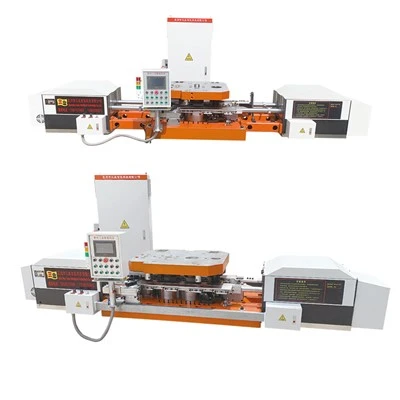
If you’re an aerospace engineer, part designer, or procurement manager who’s interested in learning more about how bearing ring formers can work for your specific application, we’re here to help. We can run a custom FEA test, provide a sample of an aerospace-grade formed ring, or walk you through the full process from design to delivery. Don’t hesitate to reach out to discuss your requirements in detail.
Busher Former Machine References
ASM International. (2019). Metal Forming for High-Performance Aerospace Components. Materials Park, OH: ASM International.
Federal Aviation Administration (FAA). (2021). Part 25: Airworthiness Standards: Transport Category Airplanes, Subpart E – Structure. Washington, DC: U.S. Department of Transportation.
NASA Glenn Research Center. (2020). Additive and Forming Processes for Aerospace Bearing Components. Cleveland, OH: National Aeronautics and Space Administration.
Society of Manufacturing Engineers (SME). (2022). Advanced Metal Forming for Aerospace Applications. Dearborn, MI: SME.
Aerospace Industries Association (AIA). (2021). Quality Assurance Standards for Aerospace Components. Arlington, VA: Aerospace Industries Association of America.
Quanzhou Sanye Intelligent Technology Co., Ltd.
As one of the most professional bearing ring former manufacturers and suppliers in China, we have world-leading production equipment and strong manufacturing capabilities. Please rest assured to buy customized bearing ring former made in China here from our factory. Welcome to contact us for quotation.
Address: Anhai Town, Jinjiang City, Fujian Province, China
E-mail: jack_tmm@163.com
WebSite: https://www.qzsymanipulator.com/
