If you’ve ever stood in front of a production line, saw a critical task grind to a halt, and realized the culprit is your screw air compressor’s pressure dropping, you know how frustrating that feeling is. As a screw air compressor supplier who’s fielded hundreds of these calls over the last 12 years—from small woodworking shops to large food processing plants—I’m here to break down the most common, science-backed reasons this happens, how to spot them, and what you can do to get your compressor back up to full pressure fast. No generic jargon, just real-world answers from people who live with these machines every day. Screw Air Compressor

First, let’s start with the basics: screw air compressors work by trapping air between two meshing helical rotors, then squeezing it into a smaller volume to raise pressure. That pressure is measured in bar, psi, or mbar, and consistent pressure is non-negotiable for things like pneumatic tools, paint sprayers, packaging machinery, and even process systems in manufacturing. When that pressure starts dropping unexpectedly, it’s almost always tied to one of four core issues: air leakage, component wear, improper operation or settings, or maintenance oversights. Let’s dive into each one, with real examples from my customers to make it concrete.
Air leakage is the most common culprit, and it’s way more expensive than most people think. A small leak—even as small as a pinhole in a ¼-inch line—can waste up to 20% of a compressor’s total output, according to data from the Compressed Air and Gas Institute (CAGI). But why is it so persistent? Leaks aren’t always obvious; they can hide in pipe joints, hose connections, valve seats, and even worn seals on pneumatic tools. I once had a customer in a metal stamping plant call me panicking because their 100-horsepower compressor was dropping from 7 bar to 5 bar mid-shift. We did a leak detection test (just spraying soapy water on all connections and watching for bubbles) and found a 1-inch gap in a pipe fitting that had loosened over time from constant vibration. That single fix got their pressure back to full in 15 minutes, and they later told us they were wasting over $12,000 a year on electricity because of that one leak.
What makes leakage tricky is that it doesn’t just show up at the compressor itself. A lot of people check the compressor’s gauge and assume the problem is there, but the real issue is 50 feet away at a tool or a actuator. Another example: a local bakery was struggling to keep their proofing chamber’s air pressure consistent, and their compressor’s gauge read fine. Turns out, a flexible hose leading to the chamber had a slow leak that only showed up when the system was under full load—when pressure surged, the hose expanded enough to cover the gap, and when it stabilized, air leaked out. That’s why regular leak checks, done at full load, are critical. For new compressor installations, we always recommend a baseline leak test to identify and fix leaks before they become a problem, which is one of the many pre-handover services we offer as a supplier.
Next up, component wear and tear on the compressor itself, which is inevitable with regular use, but often misdiagnosed. The heart of a screw compressor is the rotor set, air end, if you will. Over thousands of hours of operation, the rotors can wear down from friction, especially if the oil (used for lubrication, sealing, and cooling) isn’t changed on schedule. When rotor surfaces get scratched or the clearances between them widen beyond the manufacturer’s specs, the compressor can’t squeeze air as efficiently, leading to a pressure drop. A common sign of this is not just low pressure, but also higher operating temperatures or unusual noise from the air end. I recently worked with a customer who’d run their compressor for 8,000 hours without an oil change—their rotor clearances had widened by 0.2 mm, which is enough to reduce pressure output by 15% and increase energy use by 10%. Replacing the air end (or in some cases, rebuilding it) fixed the pressure issue, and adding a scheduled maintenance plan kept it from happening again.
Other wear parts that cause pressure drops include the air filter, oil filter, and separator core. The air filter is designed to block dust and debris from entering the compressor, but if it’s clogged, it restricts the amount of air that can get into the system, so even if the compressor is working at full capacity, it can’t build the pressure it needs. We tell customers to check their air filter every 500 hours and replace it every 2,000 hours, but I’ve seen filters that were so caked in sawdust or metal shavings that they looked like solid blocks of material. The oil separator core, which keeps oil from mixing with compressed air, can also get clogged over time. When that happens, it creates a backpressure that forces the compressor to work harder and reduces net pressure output. A good rule of thumb for these parts: follow the manufacturer’s replacement schedule, and if you see pressure dropping consistently alongside higher energy bills, check these parts first.
Third on the list is improper operation or incorrect settings, which is often an easy fix once you know what to look for. Many operators adjust their compressor’s pressure settings to match their load, but if they set the “cut-out” pressure (the point where the compressor stops running) too low, or the “cut-in” pressure (where it restarts) too high, you’ll see a gradual pressure drop between cycles. For example, if you set cut-out at 7 bar and cut-in at 5.5 bar, the compressor will only run long enough to get to 7 bar, but if the system uses more air than the compressor can produce during its on-cycle, it will never reach full pressure, leading to a steady drop. The ideal pressure differential is usually 0.5 to 1 bar, not 1.5 bar or more. I’ve also seen operators turn down the compressor’s capacity control to save energy, but if they don’t adjust the pressure settings accordingly, they end up with insufficient pressure for their tools. Another common mistake: running multiple tools or machines that require high pressure all at once, exceeding the compressor’s rated output. If your compressor is rated for 100 CFM (cubic feet per minute) and you’re running tools that need a total of 120 CFM, pressure will drop as the system can’t keep up. That’s not a compressor defect—that’s matching your equipment to your demand, something we help customers with during the consultation phase when they’re choosing a new screw air compressor.
Finally, maintenance oversights that snowball into pressure problems. Screw compressors are designed to run smoothly, but small missed steps can lead to big issues. For example, moisture in the system—if the air dryer isn’t working properly, water can build up in the lines, causing blockages and reducing pressure. Or if the oil level is too low, the rotors don’t seal correctly, leading to air leakage inside the air end. We once had a customer who forgot to drain the condensate from their compressor’s tank every day. Over time, water rusted the tank’s internal walls, and the rust particles clogged the outlet valve, creating a restriction that dropped pressure by 2 bar overnight. Simple, daily maintenance tasks like draining condensate, checking oil levels, and inspecting hoses and connections can prevent 70% of unexpected pressure drops, according to CAGI data. As a supplier, we don’t just sell compressors—we provide detailed maintenance checklists and training to our customers, because we know that a well-maintained compressor is a reliable compressor.
Now, let’s talk about how to troubleshoot if you’re facing a pressure drop right now, because I get calls like this almost every week. First, check the obvious: is the main supply valve open? That sounds silly, but I’ve had customers call because someone had closed a valve for maintenance and forgotten to reopen it. Next, check the air filter gauge: if it’s in the red, replace the filter. Then, do a quick leak test—soapy water on all connections, watch for bubbles, listen for hissing sounds (especially at night when the shop is quiet, leaks are easier to hear). If none of that works, check your pressure settings: log the cut-in and cut-out pressures over an hour to see if they’re within the recommended range. If you’ve done all that and the pressure is still dropping, it’s probably a component issue, like a worn air end or clogged separator core, and that’s when a professional inspection is a good idea.
Here’s the thing I always tell my customers: a pressure drop isn’t just an inconvenience—it’s a sign that your compressor is working inefficiently, costing you more in electricity and repairs over time. The average screw air compressor uses 10-15% of a facility’s total energy bill, so even a 5% pressure drop can add up to thousands of dollars in extra costs each year. That’s why taking the time to diagnose and fix the problem quickly is worth it.
If you’ve tried troubleshooting and still can’t figure out why your screw air compressor pressure is dropping, or if you’re due for a routine inspection, we’re here to help. Our team has technicians with decades of experience working with all brands of screw air compressors, and we offer on-site assessments, emergency repairs, and preventive maintenance plans tailored to your facility’s needs. We also work with you if you’re looking to upgrade your compressor to match your current demand—no one-size-fits-all solutions, just advice based on your specific operation.
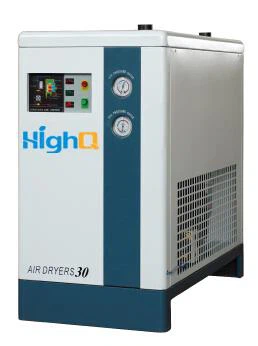
At the end of the day, my job as a screw air compressor supplier isn’t just to sell a machine and move on. It’s to make sure that when your production line is running, your compressor is running reliably, so you don’t have to deal with unexpected halts or lost revenue. If you’re facing pressure issues, or if you just want to make sure your system is set up to run at full efficiency, get in touch to discuss your needs.
AIR PIPE References: Compressed Air and Gas Institute, Screw Compressor Maintenance Best Practices, 2022; U.S. Department of Energy, Compressed Air System Efficiency Guidelines, 2021; Global Compressed Air Industry Report, Screw Compressor Segment Analysis, 2023.
Xiamen HighQ Compressor Co., Ltd.
With over 20 years’ experience, Xiamen HighQ Compressor Co., Ltd. is one of the most professional screw air compressor manufacturers and suppliers in China. We warmly welcome you to buy high quality screw air compressor made in China from our factory. Good service and punctual delivery are available.
Address: 7th F. No.704 Yi Hua Center Xiamen China 361100
E-mail: vincent@hqcompressor.com
WebSite: https://www.hqcompressor.com/
