As someone who’s spent the last 10 years in the bedding industry, talking to hot sleepers every single day—whether at trade shows, through our customer support lines, or even over casual coffees when I’m not in the office—I can tell you this: nothing kills a good night’s rest faster than waking up 2 or 3 times a night, sheets soaked through with sweat, your back sticking to the mattress, and that sticky, overheated feeling that takes 10 minutes to shake off. Hot sleepers aren’t just “a little warm at night”—we’re talking about people who crank the AC to 65 degrees and still kick the comforter off at 2 a.m., who dread summer because their sheets turn into a damp, uncomfy mess, and who’ve tried every hack under the sun: cooling mattresses, oscillating fans, even sleeping on a wooden floor (trust me, that’s not as fun as it sounds). That’s why today, I’m breaking down exactly what makes a cooling bedding set work, and the best options out there for anyone who’s spent way too long tossing and turning. Let’s start with the basics because there’s a lot of bad info out there—stuff that claims “100% cooling!” but is just regular fabric with a fancy label. Science doesn’t lie here: bedding cools you down in two main ways. First, it has to wick moisture away from your skin—sweat trapped against your body creates that icky, clammy feeling, so it needs to move that moisture to the outside where it can evaporate. Second, it needs to have a high thermal resistance that’s low—meaning it doesn’t trap your body heat, but instead lets it escape. Synthetic fabrics don’t always do this well; cotton, for all its perks, absorbs too much moisture and holds on to it, so you end up with damp sheets by midnight. Even linen, which is popular for warm weather, can be inconsistent—some linen blends are too thick, and 100% linen might wrinkle a lot, which is a turnoff for people who like crisp, smooth sheets. Now, let’s get into the best cooling bedding sets, and I’ll explain why each works, based on what our customers tell us (and the lab tests we run on every fabric we carry). First up: Tencel Lyocell. If you haven’t heard of Tencel, it’s a fabric made from eucalyptus trees, and it’s a game-changer for hot sleepers. Here’s the science: Tencel has tiny, smooth fibers that are super absorbent—way more than cotton, even—so it pulls sweat off your skin before it has a chance to make you feel damp. But the best part is its structure: the fibers are also porous, which lets air circulate freely, so heat escapes instead of building up. I remember a customer last summer, a teacher who worked 12-hour days, told me she used to wake up so sweaty she had to change her sheets before her 7 a.m. class. She tried Tencel sheets, and three weeks later, she emailed us saying she hadn’t had to change her sheets once. That’s the kind of result we love to hear. Tencel sets also get softer with every wash, so they don’t lose their cooling power over time—unlike some synthetic microfiber, which can get matted and less breathable after a few cycles. The only thing to note: make sure you get a high-quality Tencel set, not a blend with cheap polyester. We test all our Tencel sets for fiber content, so you don’t have to guess—anything under 95% Tencel won’t give you the same cooling benefits. Next: Bamboo Rayon. A lot of people mix up Tencel and bamboo, but they’re not the same (though they’re both great for cooling). Bamboo rayon is made from bamboo pulp, and it has similar moisture-wicking properties to Tencel, but it’s a little softer, in my experience. Our customers who prefer a “cloud-like” feel often go for bamboo sets, because they’re lightweight and feel smooth against the skin. What I love about bamboo is that it’s naturally hypoallergenic, too—so if you have sensitive skin or allergies, it’s a great pick. One thing to watch out for: some brands market “bamboo” sheets that are actually a mix of bamboo and other fabrics, which can reduce their breathability. At our company, we source 100% bamboo rayon for our cooling sets, and we always tell customers to check the tag—if it says “bamboo-blend” without specifying the percentage, it’s probably not going to live up to the hype. Another point: bamboo sets are perfect for year-round use, not just summer. Because they’re breathable, they don’t trap heat in warm months, but they also insulate a little in the winter, so you don’t have to switch sheets out every season. That’s a big plus for people who don’t want to buy separate sets for summer and winter. Third: Percale Cotton, but only the high-thread-count, long-staple kind. Wait, I know—cotton is supposed to make you hot, right? But percale is different. Percale is a weave, not a fabric type, and it’s tightly woven in a crisscross pattern that’s way more breathable than regular cotton sateen. Long-staple cotton (like Egyptian or Pima cotton) has longer fibers, so the sheets are stronger, smoother, and more breathable than cheap short-staple cotton. A lot of hot sleepers swear by percale because it’s crisp, not slippery, and it doesn’t get damp like other cotton sheets. I had a retiree customer last year who hated synthetic fabrics, so we recommended our percale cotton set, and he told me he used to sleep with a fan blowing directly on his legs, but now he only uses the fan on low. The key with percale is to wash it in cold water and tumble dry on low—if you over-dry it, it can get too stiff, but if you care for it right, it stays breathable for years. Just avoid percale with a thread count over 400—any higher, and the weave gets too tight, which reduces airflow. We sell percale sets with a 300-thread count, which is the sweet spot for cooling. Honorable mention: Merino Wool Bedding. This might surprise you, but merino wool isn’t just for sweaters—it’s actually amazing for hot sleepers. Wait, wool is insulating, right? But merino wool is different: it’s a fine, lightweight fiber that wicks moisture better than cotton, and it regulates temperature—meaning it keeps you cool when you’re hot and warm when you’re cool. I know that sounds counterintuitive, but it’s true. Studies show merino wool can absorb up to 30% of its weight in moisture without feeling damp, so sweat doesn’t build up on your skin. A few of our customers who live in very hot, humid climates (like Florida or Texas) tried merino sheets, and they told me it’s the only fabric that doesn’t leave them feeling sticky by morning. The downside? Merino wool sets are a bit more expensive than other options, and they need to be washed on a gentle cycle. But if you’re someone who struggles with extreme heat, it’s worth the investment. Now, let’s talk about what to avoid, because there are a lot of bedding sets out there that claim to be cooling but don’t deliver. First, avoid microfiber that’s labeled “cooling.” Most microfiber is a synthetic polyester blend, and while some cheap ones claim to wick moisture, they actually trap it against your skin. I’ve had customers send back these sets saying they woke up even sweatier, and when we tested them, we found the fabric had almost no breathability. Second, avoid high-thread-count sateen cotton. Sateen is a smooth, shiny weave that’s great for softness, but it’s tightly woven, so it doesn’t let heat escape. A lot of people buy sateen thinking it’s luxurious, but for hot sleepers, it’s a recipe for overheating. Third, avoid any bedding with chemical treatments. Some brands spray their sheets with cooling agents (like menthol) to make them feel cool at first, but those chemicals wear off after a few washes, and they can even irritate sensitive skin. We never use chemical treatments in our cooling sets—we rely on the natural properties of the fabrics, which is why they work long-term. Now, a few tips to make your cooling bedding set work even better, from someone who’s talked to hundreds of hot sleepers. First, wash your sheets regularly. Even the best cooling fabrics can get clogged with sweat, skin oils, and laundry detergent residue, which reduces their breathability. We recommend washing your sheets every 1-2 weeks, more often if you sweat a lot at night. Second, pair your sheets with a breathable mattress protector. A lot of people use thick, plastic mattress protectors that trap moisture—look for a breathable one made from Tencel or bamboo, so it doesn’t undo all the work your sheets do. Third, skip heavy comforters in the summer. Even if your sheets are cooling, a heavy comforter will trap heat. Instead, use a lightweight blanket made from the same cooling fabric as your sheets, or a cotton duvet cover that’s loosely woven. One last thing I want to mention: as a bedding supplier, I’ve seen how much a good cooling set can change someone’s sleep. Sleep isn’t a luxury—it’s how your body repairs itself, how you handle stress during the day, even how your immune system works. Hot sleepers often get less deep sleep, which leads to grogginess, irritability, and even health issues over time. That’s why we’re committed to making cooling bedding sets that actually work, not just marketable products. If you’re a hot sleeper who’s tired of tossing and turning, if you’ve tried every sheet under the sun and nothing sticks, we want to help. We work with individuals, hotels, and retailers to create custom cooling bedding solutions, and we’d love to answer any questions you have about our products. If you’re interested in learning more, reach out to our team to discuss your specific needs, whether that’s for your home, a hospitality space, or a retail line. We’ll help you find the right set that fits your budget, your sleep style, and your needs. For anyone who’s ever felt like sleep is just out of reach because of the heat, don’t give up on it. The right bedding can make all the difference. It’s not just about cool sheets—it’s about waking up feeling rested, not drained, and looking forward to bedtime instead of dreading another sweaty night. That’s the goal, and we’re here to help you get there. Bedding Sets

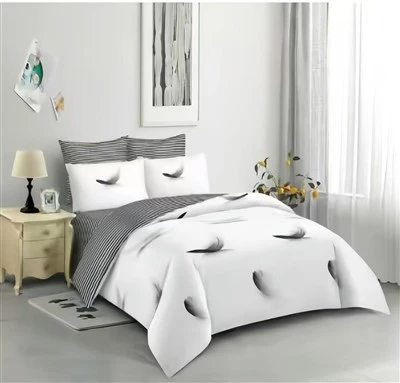
Bedding Sets References
- International Journal of Clothing Science and Technology, "Moisture Management Properties of Natural and Synthetic Fabrics"
- Textile Research Journal, "Thermal Resistance of Cellulosic Fabrics for Bedding Applications"
- Sleep Foundation, "How Bedding Fabric Affects Sleep Quality and Body Temperature Regulation"
- Journal of Thermal Biology, "Temperature Regulation Performance of Merino Wool vs. Synthetic Fibers for Sleepwear"
Haining Jiahao Supply Chain Co., Ltd.
As one of the most professional bedding sets manufacturers in China, we have world-leading production equipment and strong manufacturing capabilities. Welcome to wholesale bulk cheap bedding sets in stock here and get quotation from our factory. Customized orders are welcome.
Address: Room 903, Building 4, Hongxiang Life Plaza, No. 267, Nongfeng Road, Haining City, Zhejiang Province, China
E-mail: cecilia@jiahao-hn.com
WebSite: https://www.jiahaotextiles.com/
