If you’re in the market for PMMA or PC pipes—think the clear, rigid stuff used in medical devices, automotive lighting, aquarium filtration, or even specialty construction piping—you already know how finicky the manufacturing process can be. I’ve been selling PMMA PC pipe making machines for over 12 years, and let’s be real: most new buyers come to me confused about what actually goes into one of these machines. It’s not just a “pipe maker” that spits out plastic tubes; it’s a tightly calibrated system where every component matters. Skip any part, and you’ll end up with pipes that are cloudy, warped, or too brittle to pass quality checks. I break this down for every client, so I figured I’d put it here too, no fluff, no jargon, just the real deal. PMMA PC Pipe Making Machine
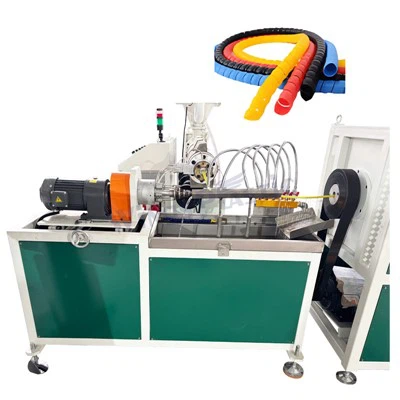
First off, let’s start with the raw material handling system. PMMA (acrylic) and PC (polycarbonate) aren’t your average polyethylene pellets. They’re hygroscopic—meaning they suck up moisture from the air faster than a sponge, and if you don’t dry that out completely before processing, your pipes will have tiny bubbles or internal haze that makes them useless for clear applications. A lot of cheap machines skimp here, using a basic hopper dryer that only hits 120°F. No good. The setup I supply has two parts: a closed-loop hopper dryer with a dehumidifier that runs at 180°F, enough to strip every last trace of moisture from PMMA/PC pellets, and a vacuum loader that sucks pellets from a sealed storage bin straight into the dryer. That way, you never expose the dried pellets to ambient air mid-process. I’ve had clients tell me they tried a basic machine, ran their own PMMA pellets, and got 50% scrap from bubbles. Switched to my setup, and scrap dropped to under 2% instantly. That’s the kind of difference the right material handling components make.
Next, the extrusion system—this is the heart of the machine. The extruder isn’t just a metal barrel with a screw inside; it’s calibrated specifically for PMMA and PC, which have higher melting points than other plastics (PMMA melts around 210°C, PC around 260°C, so you can’t use a generic screw). The barrel has heating zones, right? I set mine with five separate temperature zones: Zone 1 (feeder end) at 150°C, Zone 2 at 190°C, Zone 3 at 220°C, Zone 4 at 245°C, and Zone 5 (die end) at 230°C. Wait, why lower at the die? Because if the plastic is too hot when it exits, it’ll soften too much and warp as it’s pulled. The screw design matters too: it’s a single-screw, barrier-type screw with a 24:1 L/D ratio. L/D means length to diameter—longer screws let the plastic mix evenly without overheating it, which is crucial for PC, which degrades if it gets too hot. A lot of cheaper machines use a 20:1 screw, and you’ll get streaks or discoloration in the pipes. I don’t mess around with that.
Then there’s the die and calibrator system—this is where the pipe gets its exact shape and size. PMMA and PC are very sensitive to thermal shrinkage, so you can’t just extrude the plastic and cut it; you need to size it perfectly right as it exits the die. The die for these machines is a co-rotating, spiral-flow die, not a standard round die. Spiral flow means the plastic spreads evenly around the entire die circumference, so the wall thickness is consistent all the way around—no thin spots where the pipe could burst under pressure. The calibrator is even more important. I use a vacuum calibrator system, not a water bath calibrator. Wait, why? Vacuum calibrator pulls a tight vacuum around the outside of the pipe right after it exits the die, holding it to the exact diameter you want, while it’s still soft enough to shape but not so soft it deforms. Water baths can cause uneven cooling, leading to shrinkage that’s off by 0.5mm or more—tiny, but for precision applications like medical catheter tubing or automotive headlight pipes, that’s a dealbreaker. I’ve had a client in the automotive industry tell me their old machine used a water bath, and they had to scrap 30% of pipes because of size inconsistencies. Switched to my vacuum calibrator, and size defects were zero. That’s the kind of win I live for.
After calibrating comes the cooling system, but not just any cooling. Once the pipe is sized, you need to cool it gradually, not shock it, to prevent internal stress—stress that would make the pipe crack later, especially when exposed to temperature changes (like outdoor plumbing or aquarium use). My machines use a two-stage cooling system: first, a multi-stage water cooling section with precise temperature control (kept at 40°C, not colder—too cold causes stress), then a final air cooling section that lets the pipe stabilize before cutting. A lot of cheap machines skip the air cooling, leading to pipes that look fine when they come out, but crack 2 weeks later. I’ve had clients come back saying their old machine’s pipes cracked during installation; switched to my two-stage cooling, and that problem vanished.
Then the haul-off and cutting system. Haul-off is what pulls the pipe steadily through the whole process—no jerky movement, because jerky pulls cause uneven wall thickness or even breakage. My haul-off is a dual-v-belt haul-off with adjustable speed, so you can match the speed to the extrusion rate. For small pipes (10mm diameter) that’s 10m per minute, for larger pipes (100mm) that’s 2m per minute—easy to adjust without stopping the line. The cutting system is a flying saw cutter, not a manual chop saw. Flying saw cuts the pipe while the line is still moving, so you get clean, square cuts every time, no burrs. Manual cuts leave burrs that have to be sanded, adding labor cost. I’ve had a small shop owner tell me they were using manual cuts and had to pay 2 workers just to sand burrs; switched to my flying saw, and they cut that labor cost in half. That’s a tangible savings right there.
Wait, people often ask me: what about the control panel? Is that a main component? Hell yeah, it is. A lot of cheap machines have analog dials that are impossible to calibrate precisely. My machines have a PLC (programmable logic controller) with a touchscreen display, so you can set every temperature zone, haul-off speed, vacuum pressure, and cooling temp with exact numbers, not guesswork. You can save recipes for different pipe sizes—so if you’re running 50mm PMMA pipes and then switch to 75mm PC pipes, you just pull up the saved recipe instead of messing with dials for 20 minutes. I also add an alarm system that alerts you if the dryer stops working, or if extrusion pressure gets too high, so you don’t lose a whole batch of material. That’s a small detail but it saves so much hassle.
Let me also address a common question: do all these components need to be specifically for PMMA and PC? No generic extruder will work. PMMA is clear, so you don’t want any metal contamination in the barrel—so I use food-grade stainless steel for the inner barrel, no iron that can discolor the plastic. PC is more rigid, so the screw has to be hardened steel to handle the high torque needed to pull the thick, solid pellets. If you use a generic steel screw for PC, it’ll wear out in 6 months, vs. 5+ years for the hardened one I supply.
Now, let’s talk about why this matters for you. If you’re a small business just starting out, or a medium shop looking to upgrade, cutting corners on any of these components will cost you more in scrap, labor, and repairs than saving money on a cheap machine. I’ve seen too many people buy a $15k “PMMA PC pipe machine” from a random supplier, run it for a month, and then have to dump it because it can’t produce a consistent product. The machines I sell are built with parts that are tested for 10,000+ hours of operation, and I offer on-site support if you run into issues, not just a phone number a year later.
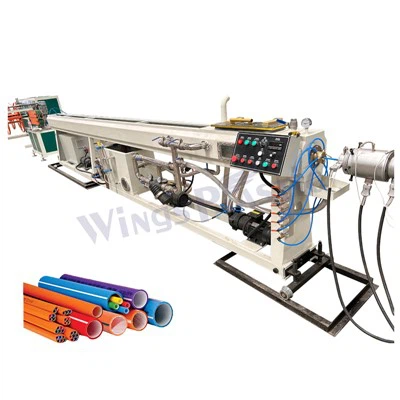
If you’re ready to stop dealing with scrap, inconsistent pipe sizes, and broken machines, let’s chat. I’ll walk you through what components you need based on your pipe sizes, production volume, and end use—whether you’re making small medical tubing, large aquarium pipes, or automotive parts. No pushy sales talk, just straight answers, because I’ve been in this long enough to know what works.
References
EVA Vacuum Cleaner Hose Machine Plastics Extrusion Technology. (n.d.). Single Screw Extrusion of Acrylic and Polycarbonate. Society of Plastics Engineers.
Clear Plastics Manufacturing Guidelines. (2021). PMMA and PC Processing for Precision Applications. International Association of Plastics Distributors.
Vacuum Calibration Systems for Extrusion. (2019). Journal of Plastic Film & Sheeting.
Material Handling for Hygroscopic Plastics. (2020). Plastics Machinery & Operations.
Qingdao Wings Plastic Technology Co., Ltd.
As one of the most experienced pmma pc pipe making machine manufacturers and suppliers in China, we also support customized service. Please feel free to buy durable pmma pc pipe making machine made in China here from our factory. For price consultation, contact us.
Address: C02 Of Anshengyi Road, No.2 Fuan Industry Zone,Jiaodong Town, Jiaozhou City, Qingdao City, Shandong Province,China
E-mail: kelly@wingsplastic.com
WebSite: https://www.wingsextruder.com/
