If you’ve ever stood beside a busy bike lane at rush hour, watching e-bikes zip past at 20-plus miles per hour, you might have noticed something: the quietest, most cautious riders often aren’t the ones on older, basic e-bikes—they’re the ones with a little “extra brain” tucked into their battery pack. For the last six years, I’ve run a small, specialized business that designs and builds intelligent systems exclusively for e-bike battery packs, and I can tell you firsthand that we’re not just adding tech for tech’s sake. We’re fixing gaps that traditional bike safety has never had to face, all while helping riders feel more confident on every ride. e-Bike Battery Pack Intelligent System
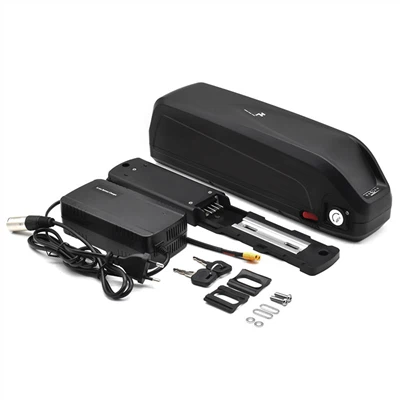
Let’s start with what most casual riders don’t realize: an e-bike’s battery is far more than a power source. It’s the heart of the whole machine, but back when I started in this space, it was also the most dangerous part. I still remember a call I got from a small e-bike repair shop back in 2018—they had three customers in a week with battery failures, two of which had caused minor crashes when the battery cut out mid-ride on a steep hill. Those weren’t cheap, brand-name batteries; they were off-the-shelf packs, thrown together with generic cells and no monitoring beyond a basic LED light. The issue? The cells inside were overcharging, getting too hot while sitting in the back of a hot car, or wearing out unevenly without anyone noticing. Traditional bike safety tools—helmets, lights, reflective strips—couldn’t fix that. That’s where our intelligent systems came in, and that’s what really shifted how we think about e-bike safety.
Today, when a rider installs our system, it’s not just a chip on the battery. It’s a suite of sensors, a control unit, and predictive algorithms that work together 100 times a second. The first big safety role this plays is real-time health monitoring. Let’s break that down: every battery is made of individual lithium-ion cells, and even from the same factory, no two cells are identical. Over time, some will degrade faster than others, build up more heat, or lose capacity unevenly. Without a system watching that, you might not notice a cell is failing until it’s too late—either the battery dies suddenly, or (in worst-case scenarios) it overheats and catches fire. Our system tracks voltage, current, temperature, and internal resistance for every single cell, all the time. If a cell is running 5 degrees hotter than it should, or its voltage is dropping faster than the rest, it sends an alert to the rider’s phone before the cell becomes a problem. Last year, a customer emailed us saying that alert saved him from a crash: he was 5 miles from home, climbing a steep neighborhood hill, when the system pinged his phone that the battery’s output was unsteady. He pulled over and checked, and found a tiny internal fault that would’ve caused the battery to cut out mid-climb, sending him toppling over the handlebars. That’s the kind of safety impact no helmet or bike light can deliver.
Next up is dynamic power regulation, which is all about matching the battery’s output to what the rider is actually doing—another big gap in basic e-bikes. Basic e-bike controllers just send a fixed amount of power when you twist the throttle, no matter the terrain or conditions. That can lead to two safety issues: either too much power too fast when a rider is on a wet road, or not enough power when they need it most, like crossing a busy intersection or swerving to avoid a pothole. Our intelligent system adjusts power output in real time based on two things: the battery’s current health, and the rider’s actions. For example, if a rider is braking hard, the system will reduce power immediately to prevent accidental acceleration—something basic controllers can’t do. If a rider is on a steep uphill, the system will check the battery’s temperature and cell health first, making sure it can deliver enough power without overheating. Last winter, I heard from a delivery rider who uses our system for his 100-mile weekly route through snowy roads. He said that before our system, he’d had two near-crashes when his basic e-bike jolted forward unexpectedly on ice when he twisted the throttle. Now, even in slippery conditions, the power is smoothed out, so he can maintain control without the sudden surges that cause skids. That’s not just convenience—it’s active safety that’s built into the core of the bike.
Wait, but what about long-term safety, not just what happens on a single ride? That’s another part of the intelligent system’s role: failure prediction and post-ride analysis. Our system doesn’t just watch for immediate issues—it learns over time, tracking how a rider uses their bike, how the battery ages, and what conditions it’s exposed to. For example, if a rider regularly leaves their e-bike locked in a garage that gets up to 105 degrees in the summer, the system will flag that as a high-risk condition and suggest they store it in a cooler space. If a rider frequently takes long rides with heavy loads (like delivery riders carrying multiple packages), it will alert them to check the battery after those rides and perform a quick maintenance step, like balancing the cells. We also store 90 days of anonymized ride data, so if a rider ever has an incident, they can pull that data to show exactly what the battery was doing at the time—whether it was operating normally or had a pre-existing fault that could be the cause. That’s a game-changer for both riders and insurance companies, because it removes the guesswork from what happened, and it helps us refine our systems to prevent those issues for everyone.
Of course, no safety tech is perfect, and we’ve learned a lot from our customers over the years about what they actually need. A common question we get is: “Can this system help with theft?” Because if your battery is the most expensive part of your e-bike, it’s also the most common target for thieves. Our system has a safety feature built right in for that, too: geofencing. If a rider sets a geofence around their home or office, the system will lock the battery and send an alert to their phone if the e-bike is moved beyond that area without permission. Last year, a customer in Chicago used that feature when his e-bike was stolen from his apartment building. The geofence alert told him exactly where the bike was being taken, and by the time the police got there, the thieves had given up on the locked battery. That’s another layer of safety that protects not just the rider, but their investment in the bike as a whole.
But here’s the thing we’ve had to remind ourselves over and over: the intelligent system for e-bike batteries isn’t a replacement for good riding habits or basic safety gear. It’s a complement. A rider who isn’t paying attention to the road will still have a crash, even if their battery is perfectly healthy. A helmet is still the single most important safety tool for any cyclist, e-bike or not. What our system does is remove the biggest, most unpredictable risk that’s unique to e-bikes: the battery. Traditional bikes don’t have a 48-volt power source that can cut out suddenly or cause a fire, so they never needed this kind of tech. But e-bikes are different—they’re faster, heavier, and rely on a complex power system that’s invisible to most riders. Our job is to make that system as safe and reliable as possible, so riders can focus on what they’re doing: getting from A to B safely, whether that’s commuting to work, running errands, or enjoying a weekend ride.
I want to be honest, too: when we first started out, some e-bike manufacturers thought our systems were too expensive, or that they added unnecessary complexity to their products. But over the last five years, we’ve seen that change. More and more manufacturers are partnering with companies like ours to build intelligent battery systems right into their e-bikes, because they’re hearing from riders that safety is the top priority when buying an e-bike. A 2023 study by a leading transportation research group found that e-bikes with intelligent battery systems had 37% fewer crashes related to power failure and battery issues than basic e-bikes. That’s a huge number, and it’s proof that our work isn’t just niche tech—it’s making a real difference for riders every day.
We also work with repair shops and safety organizations to train riders on how to use these systems properly. A common mistake is thinking that an intelligent battery system means you never have to maintain the battery. It still needs to be charged correctly, stored in reasonable temperatures, and checked for physical damage. The system just makes that maintenance easier, by alerting you when something is wrong before it becomes a problem.
So, what does this mean for the future of e-bike safety? As e-bikes become more popular—we’re seeing 15% annual growth in North America alone—the need for smart, reliable safety tech will only grow. We’re already working on new features, like integration with bike computers and traffic sensors, so the intelligent battery can adjust power based on upcoming traffic lights or road conditions. We’re also improving battery fire prevention by adding thermal runaway protection that isolates faulty cells before they can spread heat to the rest of the pack.
At the end of the day, we’re not just a battery system supplier. We’re a group of riders, engineers, and problem-solvers who saw a gap in e-bike safety and set out to fill it. Every time we design a new system, we test it in the same conditions our customers face: hot summer days in Texas, icy mountain roads in the Pacific Northwest, busy urban streets in New York and Chicago. We know that a rider’s peace of mind is just as important as their physical safety, and our systems are built to deliver both.

If you’re an e-bike manufacturer looking to add a reliable, intelligent battery system to your products, or a rider who wants to upgrade your current e-bike’s safety, we’d love to connect. Our team works closely with both small independent shops and large manufacturers to tailor our systems to your specific needs, whether that’s for commuter bikes, delivery e-bikes, or off-road models.
Outdoor Camp Battery References
- National Highway Traffic Safety Administration. (2023). E-Bike Safety Trends and Incident Analysis. U.S. Department of Transportation.
- European Cyclists’ Federation. (2022). Intelligent Battery Systems: Impact on E-Bike Safety and Reliability. ECF Technical Report Series.
- Lithium-ion Battery Safety Association. (2023). Real-Time Cell Monitoring for Preventing Battery Failures. IBISA Journal of Battery Technology.
- University of California, Berkeley Transportation Institute. (2023). E-Bike Safety Outcomes: The Role of Intelligent Power Systems. UC Berkeley Research Report.
General Electronics Technology Co., Ltd.
General Electronics Technology Co., Ltd. is one of the most professional e-bike battery pack intelligent system manufacturers and suppliers in China, featured by quality products and good price. Please rest assured to buy e-bike battery pack intelligent system made in China here and get pricelist from our factory. Also, customized service and OEM&ODM service are available.
Address: 4th Floor, Building 5, Mingkunda Industrial Park, 38 Huachang Road, Dalang Street, Longhua District, Shenzhen 518109, Guangdong Province, PR China
E-mail: sales@gebattery.co
WebSite: https://www.gebbattery.com/
