When I first started my brush tufting machine supply business over a decade ago, I thought the question of what materials these machines could process would have a simple, straightforward answer. Back then, most of the brushes we made were for basic industrial scrubbers, using nothing more than nylon filament that I’d sourced from a local plastics supplier. Over the years, though, I’ve worked with dozens of clients—from small local cleaning product manufacturers to large automotive parts plants—and learned that the range of materials a brush tufting machine can handle is far broader than I ever imagined. Today, I want to break down the most common (and some unexpected) materials we work with, explain their unique properties, and share what we’ve learned about getting the best results when tufting each one. Brush Tufting Machine
Let’s start with the workhorses of the industry: synthetic filaments. These are the materials most people associate with brush tufting, and for good reason. Nylon is by far the most widely used filament across applications. It’s durable, resistant to abrasion, and can be formulated to withstand everything from harsh chemicals in industrial cleaning to high temperatures in automotive painting booths. We stock both 6-12 nylon and 6-10 nylon, depending on the client’s needs; the higher the number, the softer the filament, which is perfect for delicate tasks like car interior detailing. Polypropylene is another common synthetic, and it’s lighter and more flexible than nylon, making it ideal for brooms and push brushes used in residential cleaning. It’s also water-resistant, so it’s a go-to for outdoor brushes that need to stand up to rain and mud. Polyester is a third synthetic worth mentioning—it has a stiffer texture than nylon, so it’s great for heavy-duty scrubbing brushes used in factories or farms. One client in the food processing industry even uses polyester filaments for brushes that clean conveyor belts, because it doesn’t hold onto food residue the way some other materials do.
What many people don’t realize, though, is that brush tufting machines can also process natural fibers. For clients who make eco-friendly brushes, natural materials are a popular choice. Boar bristle is a classic example. It’s soft, dense, and has a natural spring that makes it perfect for makeup brushes, facial cleansing brushes, and even some fine paintbrushes. We’ve worked with a small cosmetics manufacturer who wanted to launch a line of vegan boar bristle alternatives, but wait—no, vegan boar bristle is a thing, right? No, actually, most vegan makeup brushes use synthetic fibers now, but some brands still use real boar bristle for its natural texture. We’ve had to adjust our machine settings slightly for natural fibers, because they’re more delicate than synthetics. Too much tension during tufting, and the bristle can fray or break. We learned this the hard way early on—we had a client who ordered boar bristle brushes, and the first batch came out with broken filaments because we set the machine tension too high. Now, we run test tufts for every new natural fiber client to calibrate the tension before full production.
Another natural fiber we work with is Tampico. Tampico is a plant-based fiber from the agave plant, native to Mexico. It’s stiff but flexible, resistant to mildew, and has a natural abrasive quality that makes it great for pot scrubbers, deck brushes, and even some industrial cleaning brushes. Unlike nylon, Tampico is biodegradable, so it’s perfect for clients targeting the sustainable market. We’ve found that Tampico works best with slightly longer tuft lengths—around 2-3 inches—because shorter lengths can be too prone to bending under pressure. Cotton is also a natural fiber we use, though less commonly for industrial brushes. It’s soft and absorbent, so it’s used in brushes for applying lotions, paints, or other liquid products. We recently worked with a craft supply company that uses cotton filaments for brushes used in decoupage and other DIY projects. The key here is that cotton is very absorbent, so when tufting, we have to make sure the machine doesn’t leave gaps that would cause the brush to hold too much liquid and drip.
Now, let’s talk about more specialized materials. For the automotive industry, we process several high-performance filaments. Carbon fiber filaments are one of them. Carbon fiber is lightweight, rigid, and has excellent conductivity, which makes it perfect for brushes used in automotive welding or static control. Wait, static control brushes—yes, those are used in car manufacturing to prevent dust from sticking to freshly painted bodies. Carbon fiber filaments can dissipate static electricity, so they’re ideal for that. But here’s the thing: carbon fiber is stiffer than most other filaments, so our machine’s needle depth and tension settings need to be adjusted to avoid bending the filaments during tufting. We also use abrasive filaments for industrial grinding and finishing brushes. These filaments are infused with particles like aluminum oxide or silicon carbide, which makes them perfect for removing rust, paint, or other tough coatings from metal surfaces. One client in the shipbuilding industry uses abrasive filament brushes to clean hulls before repainting, and the results have been way better than using traditional sandpaper. We have to be extra careful with these abrasive filaments, though—they can wear out the machine’s needle faster than regular filaments, so we recommend regular maintenance for clients using them.
What about metal bristles? Some of our clients make brushes for heavy-duty tasks, like cleaning industrial machinery or removing scale from pipes, and they use metal filaments. Steel wire is the most common, available in different gauges—thinner gauges for delicate tasks like cleaning small parts, thicker gauges for heavy-duty scrubbing. Stainless steel wire is another option, which is resistant to rust and corrosion, so it’s great for marine applications or food processing plants where rust is a concern. We also work with brass wire, which is softer than steel and doesn’t scratch delicate surfaces like aluminum or copper. A client in the aerospace industry uses brass wire brushes to clean aircraft parts, because even a tiny scratch can cause problems. Metal filaments, though, present a unique challenge for our machines. They’re much stiffer than natural or synthetic filaments, so we have to use a different type of tufting head—one that can handle the rigidity without breaking the wire. We also have to make sure the machine’s cutters are sharp, because dull cutters can leave burrs on the wire, which would make the brush uncomfortable to use or damage the surface it’s cleaning. We learned this lesson when a client received a batch of steel wire brushes with burrs and had to recall them. Now, we inspect every cut tuft for smooth edges before shipping.
Then there are hybrid materials—combinations of two or more filaments that combine the best properties of each. For example, we’ve worked with clients who mix nylon with Tampico to create a brush that’s both durable and eco-friendly. The nylon adds strength and abrasion resistance, while the Tampico adds a natural, biodegradable component. Another hybrid we process is nylon with carbon fiber, which gives a brush both the softness of nylon and the static conductivity of carbon fiber, perfect for electronics manufacturing where static can damage components. Hybrid materials require even more careful calibration of the machine settings. If the tension is too high, the stiffer filament (like carbon fiber) can push the softer filament out of place, leading to uneven tufts. We always run multiple tests with hybrid materials, adjusting the needle depth, tension, and tuft count until we get a uniform result.
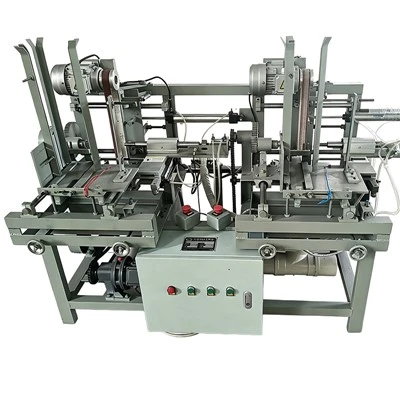
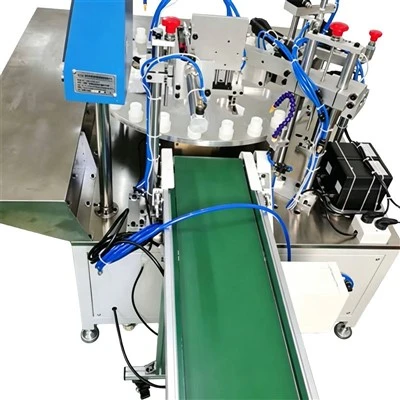
I should also mention that the type of brush tufting machine we sell matters when it comes to processing different materials. We offer two main types: semi-automatic and fully automatic. Semi-automatic machines are great for small to medium-sized production runs, and they work well with most natural and synthetic filaments. They’re also more flexible, so they can handle different filament types without as much recalibration. Fully automatic machines, on the other hand, are designed for high-volume production, and they’re ideal for processing large quantities of synthetic filaments. For metal filaments, though, we recommend a heavy-duty semi-automatic machine, because fully automatic machines can be too fast and cause the metal wire to break or bend. We always work with clients to match the right machine to their materials and production needs.
One common question we get is: “Can I tuft any material with your machines?” The short answer is no. For example, very thick filaments—over 0.5 inches in diameter—can be too much for our machines to handle, because the needles can’t penetrate the base material properly. Similarly, very brittle materials, like some types of glass fiber, can break during tufting, leading to uneven brushes and safety issues for users. We always advise clients to bring a sample of the material they want to tuft before making a purchase, because we can test it on our machines and make sure it’s a good fit. We’ve had clients bring in materials that we just can’t process, and we’re always honest about that—even if it means losing a sale, because it’s better for the client to find a machine that works for their needs than to waste money on a machine that won’t work.
Over the years, we’ve also learned a lot about how preparation affects the material. For example, filaments that are too long or too short can cause problems. If a filament is too short, it’s hard to tuft evenly, and it can get stuck in the machine’s needle. If it’s too long, it can fray during the tufting process. We recommend that clients cut filaments to the exact length needed for their brushes before bringing them to us, because that makes the tufting process smoother and reduces waste. Also, the base material of the brush—whether it’s wood, plastic, or metal—affects how the filament is tufted. For example, metal bases require stronger needles, while wood bases can be tufted with standard needles. We always adjust our machine settings based on both the filament and the base material.
What excites me most about this industry is how it’s always evolving. A few years ago, we started working with clients who use recycled synthetic filaments, like nylon made from plastic water bottles. That’s a game-changer for the sustainability market, because it allows brands to make eco-friendly brushes without sacrificing durability. We’ve had to adjust our machine settings slightly for recycled filaments, because they can be slightly more irregular than virgin filaments, but it’s been worth it to support clients who are making a positive impact. Another emerging material is plant-based synthetic fibers, made from corn or sugarcane, which are biodegradable and have similar properties to traditional nylon. We’ve started testing these materials, and so far, our machines handle them just as well as regular nylon.
At the end of the day, the key to processing different materials with a brush tufting machine is understanding each material’s unique properties and adjusting the machine settings accordingly. I’ve seen clients go from making basic brooms to specialized brushes for aerospace, cosmetics, and food processing, all because they found the right materials and the right machine to process them. If you’re in the market for a brush tufting machine, or if you have a material you want to process and aren’t sure if our machines can handle it, don’t hesitate to reach out. We’re always happy to answer questions, run tests, and help you find the perfect solution for your brush production needs. Whether you’re a small startup or a large corporation, we have the expertise to support you every step of the way.
Woodworking Machinery References
- Brush Manufacturing Technology: Materials and Processes, Industrial Press, 2018
- Natural Fiber Filaments for Eco-Friendly Brushes, Journal of Cleaner Production, Vol. 212, 2019
- Industrial Brush Applications: Material Selection and Machine Calibration, Manufacturing Engineering Society International Conference, 2021
- High-Performance Filaments for Automotive and Aerospace Brushes, SAE International Journal of Materials and Manufacturing, Vol. 15, 2022
- Sustainable Brush Production: Using Recycled and Plant-Based Filaments, Journal of Sustainable Materials and Technologies, Vol. 30, 2023
Tongcheng Shengfeng Machinery Factory
As one of the most professional brush tufting machine manufacturers and suppliers in China, we’re featured by quality products and good service. Please rest assured to buy durable brush tufting machine for sale here from our factory. Contact us for more details.
Address: Shapu Village, Qingcao Town, Tongcheng City, Anhui Province
E-mail: 15955686317@163.com
WebSite: https://www.shengfengmachine.com/
